
by Kelli Garms | Jul 24, 2026 | Women in Ministry
Backstory
They cancelled the trip, and I was devastated! I had traveled to Mexico as a translator with our church four times in the last year, and on one of those trips, I had the privilege of leading a husband and wife to the Lord. Now they were getting baptized, and they scheduled it to coincide with our trip. But none of the leaders were available for this one. Of course, I volunteered to lead the trip, but I was told that, because I’m a woman, I was not qualified. Instead, they cancelled the trip.
This threw me for a loop because while I was raised pretty conservatively, our family was church-planting missionaries. If there was a hole, we plugged it. So other than preaching to the congregation or leading a Sunday school class of mixed adults, my mom, my sisters, and I filled every ministry position possible. There were times when we led music, handled the nursery, led discussions in youth group, and took American groups around the city for ministry opportunities.
A few years later, we were attending a different church, and the pastor asked me if there was any particular passage in Romans 12 I would like to teach on a Sunday night. This shook me because if I wasn’t qualified to lead a team on a missions trip where I wouldn’t even be teaching, how could I be qualified to stand in the pulpit and exposit a Bible passage for the congregation?
That is when I decided it was time to find out for myself what the Bible actually teaches about women in ministry.
This is not a subject I ever wanted to dive into. Don’t get me wrong, I know this topic is important, but it is not a fundamental of the faith. So I think it is important to define a few things.
In matters of faith, there are primary, secondary, and tertiary issues. Here are the broad strokes.
Primary Issues
Primary issues are what give us different religions (Galatians 1:8-9, Philippians 1:27, Romans 16:17). They define what you believe about
- who God is,
- who Jesus is,
- which sacred text you adhere to,
- what problem man faces and how to solve it, etc.
Primary issues are what make Christians Christian. They define what we believe about right and wrong, and they shape our worldview. While these issues have been muddied recently and many who don’t hold to the fundamentals of Christianity are now calling themselves Christian, the topic of women in ministry does not fall in this category.
Secondary Issues
Secondary issues are what give us different denominations (1 Corinthians 8). Again, these are broad strokes, and there are issues that might straddle the lines depending on how vehemently someone holds to his position. Secondary issues include topics like
- speaking in tongues,
- baptism,
- healing ministry, etc.
While we wouldn’t question each other’s salvation, we probably would not sit in the same church for worship on a Sunday morning.
I believe the topic of women in ministry falls squarely in this category. I have heard arguments on both sides of this issue from people who truly believe they are right and feel they can support their position biblically. They are trying to hold true to what the Bible says, yet they come to different conclusions.
Tertiary Issues
The third category is tertiary issues, and they are issues that are open to debate within the same congregation (Romans 14). Not only are these issues not salvific, but they also don’t interfere with worshipping together in the same pew during a Sunday service. They fall clearly in the “Christian liberty” category. These issues can include things such as
- tithing,
- who can take the Lord’s supper and how often it is practiced,
- which translation of the Bible you use, etc.
While it may seem like these issues don’t matter as much, Paul does put boundaries on our Christian liberty, so we need to make sure we apply them.
You can find a more detailed discussion on this topic here.
It is important for us to understand that in discussing what the Bible teaches about women in ministry, we are not questioning whether or not someone who disagrees with our position is saved. So now that we have the boundaries set, let’s get into it.
Further Reading:
by Kelli Garms | Feb 13, 2026 | Book Review
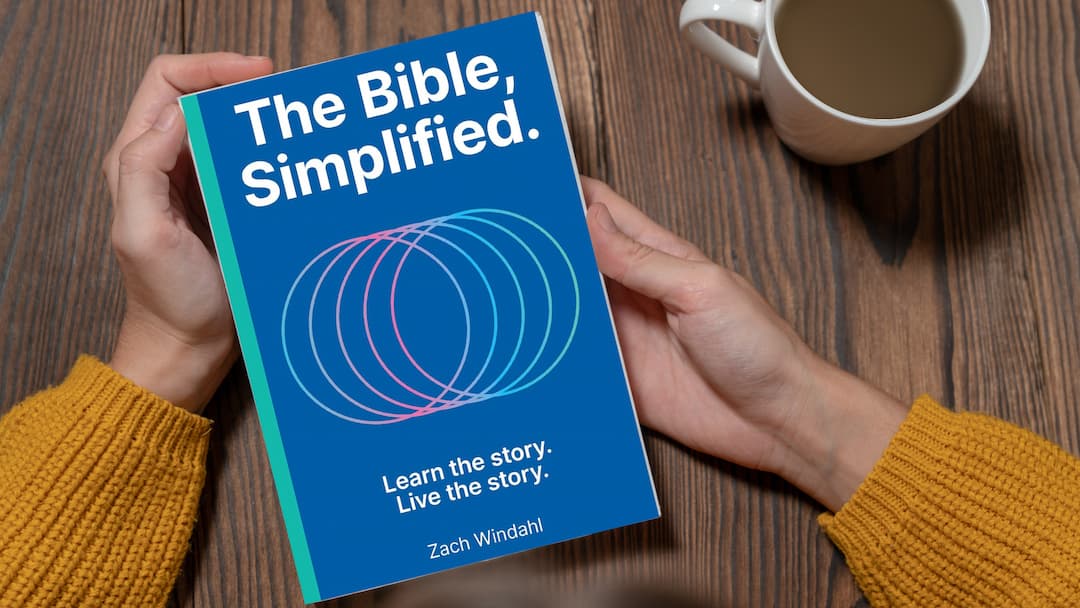
It has taken me a long time to write a review of The Bible, Simplified by Zach Wndahl because I struggle to critique any author, especially a brother in Christ, knowing what it must have taken to write a book and put it out into the world. But I also know I need to be honest in my assessment, especially when a book is aimed at new believers.
Here is my conclusion up front:
I cannot recommend this book to the audience for whom it is intended, the “beginner.”
If you want to know why, keep reading.
What I appreciated
There are many things I liked about this book, and there were times I wondered if what I appreciated could outweigh the places where I disagreed.
Windahl encourages us that,
“The Bible should be our lifeline. We need to study it as if we need it to breathe” (xii). I could not agree more.
This book offers a helpful 30,000-foot view of Scripture. It presents the overall story of the Bible and shows the cohesion between different authors, genres, and time periods.
I especially enjoyed the section that covered the 400 years between the Old and New Testaments. I do not have a lot of experience with the writings from that time, so I cannot say whether every detail was accurate, but it seems like a good starting point for someone wanting to explore that period.
I also appreciated Windahl’s treatment of the book of Revelation. He does not immediately jump to a dispensational, pre-tribulation rapture view. I was pleasantly surprised by how he handled the book, though there were still statements I questioned.
In truth, Windahl presents some ideas that made me stop and ponder, and in some cases, I understood things in a fresh way. That is always a win in my book.
However, there were also many ideas that set off alarm bells in my head.
Where I began to have concerns
In the introduction, Windahl says he will do his best to stay middle-of-the-road when it comes to doctrinal issues. In reality, that is impossible, and the book proves it. For example, he clearly comes down on the side of free will. That is not surprising, but it does mean his interpretation shows up throughout the book, even when he may not intend it.
There were many places where his wording made me uncomfortable because it painted a picture that did not quite line up with how I read the Bible. Here are only a few examples early on in the book:
- “Returning to the people we were originally created to be.”
This idea appears several times. While there is nothing wrong with that statement in itself, and it will be true in the New Earth, the context often suggests this kind of complete “return” on this side of heaven in a way that feels overstated.
- Cain’s offering.
Windahl claims that God accepted both Abel’s best offering and Cain’s ordinary offering, but simply liked Abel’s better, which made Cain angry (34). This ignores the reality that God had a standard, and Cain fell short of that standard. To present it as God preferring one acceptable offering over another softens the seriousness of Cain’s disobedience.
- The rainbow after the flood.
Windahl writes, “God even placed a rainbow in the sky, which Noah and his descendants saw as a symbol of this covenant” (49). This is misleading. Noah and his descendants saw the rainbow as a symbol of God’s covenant because God told them it was a symbol of the covenant, not because they simply chose to interpret it that way.
- The Tower of Babel.
He writes, “Instead of making bricks in abundance to help struggling people, the Babylonians chose to build a great city, along with a massive tower…” (44). This is one of several places where I saw an undertone of social justice language. There are many ways the Babylonians could have used their bricks. To frame the entire episode primarily as an oppressor vs. oppressed issue does not seem faithful to the emphasis of the biblical text, which focuses on pride and the desire to “make a name” for themselves.
- Israel “needing” a king.
In 1 Samuel, the chapter begins with, “Israel was in great need of a king, someone who could lead the people in the ways of God” (103). Was Israel really in great need of a king? Or were they coveting what their neighbors had? On the next page, Windahl includes the passage where Samuel explains the heavy demands a king will make on the people, which actually underscores that God gave them what they wanted, not what they needed.
There are multiple places where the account presented is different from how the Bible presents it. At times, the wording gives the impression that Israel thwarted God’s plans, and in other places, liberties are taken where Scripture is not explicit.
My main concern: how the gospel is defined
My biggest issue with this book is how Windahl defines the gospel.
He writes: “Jesus entered each new city claiming that he was now King. A new kingdom had arrived. And what was the good news of Jesus’ kingdom? The blind could see, the lame would walk, people with leprosy were cleaned, the deaf could hear, the dead were raised, the poor were taken care of, and the sins of humanity were forgiven” (166).
Of course, Jesus did perform miracles. He did care for the poor. But the good news of the gospel is not that the blind will see, the lame will walk, that our loved ones will be raised from the dead this side of heaven, or that we will never be poor.
The gospel begins and ends with the solution for sin.
The heart of the good news is that, through the life, death, and resurrection of Jesus, sinners can be forgiven and reconciled to God.
To define the gospel primarily in terms of physical healing and temporal care blurs that central truth, especially for newer believers who are still learning what the Bible actually promises in this life.
So who, if anyone, is The Bible, Simplified for?
You might feel like I am being nitpicky with this book, and in some ways, I am.
If you are already in the Word on a regular basis, have read it from cover to cover, and are comfortable handling Scripture, I have no problem recommending this book to you. You are more likely to notice where you agree, where you disagree, and where you need to study further.
The truth, though, is that if this describes you, the book is largely superfluous. It is not bad, but it is also not necessary.
This book is marketed to young Christians. It is for the believer who needs a guide to the Bible, the believer who does not yet understand how all the pieces fit together.
If that is you, I worry that this particular book could lead you astray in subtle but important ways.
My encouragement would be to dig into the Bible itself. And if you need a resource to help you do that, reach out to me and let me know. There are many other options I would be more comfortable recommending.
I give The Bible, Simplified 3 out of 5 stars. It is not a bad book. There were things I genuinely enjoyed and learned from it. But it requires a level of discernment that usually comes from spending time in the Bible itself, not primarily in books about the Bible.
You may also like:

by Kelli Garms | Nov 7, 2025 | Women in Ministry
Since the Share the Arrows women’s conference, there have been many posts circulating, accusing Allie Stuckey of being unbiblical for even putting on the event. I want to spend some time digging into this because there are so many misconceptions about women in ministry in our churches today.
Just for context, I have written several blog posts about the topic of women in ministry that you can read. I am a complementarian; that means I believe the Bible teaches that only men can be pastors and that the husband is the head of the home.
But I also believe that many churches have added to Scripture and unnecessarily excluded women from positions and ministries the Bible doesn’t forbid.
The Bible teaches that only men can be elders/overseers. We see this in the epistles when the requirements of a pastor are spelled out. Unfortunately, we have drifted away from using those terms and now use the term “pastor.” In addition, we use the term “pastor” to refer to anyone in leadership, including children’s pastor, youth pastor, and women’s pastor. This blurs the lines of what a pastor/elder/overseer is.
But I want to hone in on the verse that most often gets our hackles up. I encourage you to do your own study of this verse in context because you may discover there are things said about this passage that just aren’t true. If you need some direction for studying a passage for yourself, download my free workbook or enroll in my Bible Study Basics course.
Now let’s dive in.
“I do not permit a woman to teach or to exercise authority over a man; rather, she is to remain quiet.” 1 Timothy 2:12 (ESV)
Context of the Verse
The first thing we need to consider when we look at this passage is that the letter was written to Timothy, who was in Ephesus helping the church. This is in the context of the church. In a situation where the body of believers is gathered together, a woman is not to teach men or exercise authority over men.
While we can discuss the wisdom, or lack thereof, of having a woman in charge in other contexts—politics, education, workplace—this passage, and the teaching in general, is limited to the church.
A women’s conference is not church. It may happen in a church building, it may even be sponsored by a particular church, but it is not church. It is not a gathering of the whole body; it is a gathering for women in which they should be edified and educated in biblical wisdom.
Teaching Men
The limitations in this verse are of a woman teaching men or exercising authority over men. Because this is in the context of a church gathering, I would argue that we can go even a step further and say that women are not to be in a position of teaching the Bible or spiritual leadership over men.
So it is not unbiblical if a woman is in charge of the janitorial area of a church, and there are men who serve on her team, or if a woman explains a subject matter to a mixed group that is not specifically a biblical topic (though this last one could be argued either way).
A women’s conference is by definition not a woman teaching or exercising authority over men. Even if there are men in the crowd helping with security or serving the women in some other capacity, the focus of the conference is the women who are in attendance.
Not an Authority
Finally, it is important to understand what it means to exercise authority. There are many positions and ministries in a church setting that are not authoritative.
This requires a church to define the leadership positions within the organization so as not to violate the teaching. For example,
- Do the deacons in your church have authority over the congregation?
- Do participants in committees have authority?
- Does the children’s pastor have authority over men in the church?
This could be different in different churches and must be looked at on a church-by-church basis.
Just because I attend an event, even in a church building, where there is a speaker teaching a lesson, doesn’t mean that person has authority over me. I can read a book without the author having authority over me. I can listen to a podcast without the podcaster having authority over me. Again, this verse is in the context of church, and attending a women’s conference doesn’t mean I must submit to the speaker’s authority as I am commanded to do for my pastor.
While you would be hard-pressed to find any place in Scripture that requires churches to have an organized women’s ministry of any kind, you would also find it difficult to prove that women’s ministries, including conferences, are unbiblical.
This is a subject I am particularly interested in because I am one of those women who gets frustrated with fluffy, affirming, and self-focused women’s events. And I am also a woman who was led astray by unbiblical teaching by supposed Bible teachers.
Women MUST be equipped with a biblical worldview if we are going to stand firm in the onslaught of worldly ideas and recognize false teaching when we hear it. We must be equipped with a biblical worldview to raise godly children, have godly marriages, and sharpen each other in godly friendships.
While many churches have neglected the spiritual growth of the women in their congregations, I see a turning tide that gives me hope. Women who attended Share the Arrows last year and this year have returned to their home churches with a renewed mission and desire to understand the Word. Let this be the catalyst for change!
You May Also Like:
by Kelli Garms | Oct 3, 2025 | Spiritual Growth
Over the last several years, the term Christian nationalism has been thrown around without much of a definition. The point of the term has been to scare Christians out of participating in politics at any level, as if being called a Christian nationalist is tantamount to being called racist, Nazi, or white supremacist. How dare Christians bring their worldview into the ballot box, effectively forcing their views on the rest of the world?!
When this term is thrown around by the world, it is a projection. In other words, the world is being intolerant of Christians, so they must accuse Christians of being intolerant instead.
Unfortunately, this term has also created much division within Christian ranks presumably because we accept the world’s definition of the term, and we want to avoid anything that might turn an unbeliever away from following Christ. This could go into a deeper discussion about how the church has failed to stand for truth in an effort to “win souls,” but that’s another topic for another time. (If you’re interested in this topic, I recommend reading Eric Metaxas’s book Letter to the American Church and focusing on his chapter about the idol of evangelism. Sooo good!)
The American people have been quick to pick up the moniker “garbage” after Biden’s statements in a speech before the election. The Canadian people relished being called “the fringe minority” after Trudeau chose to describe the rebels in that way. The French population adopted the name of “Jacques” when the bourgeoisie claimed you couldn’t tell one from another. Yet Christians are so scared of being called anything that might offend the world, who are, might I add, enemies of God, and therefore our enemies, as well.
In the interest of full transparency, I haven’t read everything out there on this topic. I own but have not read Stephen Wolfe’s book A Case for Christian Nationalism. I don’t know how everyone is defining this term in their books or articles, but I wanted to take a look at the words themselves to see how I would define this moniker.
So let’s take the term Christian nationalist apart and analyze it.
Christian Nationalism
The term Christian in and of itself began as a slur. As Christ’s followers shared the good news of the Gospel and preached His Word, they were dubbed “little Christs” or “Christians.” While the world intended for the term Christian to be derogatory, the believers of that time claimed it as a compliment. Yes, they were trying to imitate Christ, just as His Word tells us to do. So a “slur” that showed them they were accomplishing that goal was actually high praise.
But let’s be honest: It isn’t the “Christian” part of the phrase that makes us uncomfortable. The word that conjures up visions of white supremacists and Nazis is nationalist. So let’s dive into that one.
Christian Nationalism
Until recently, none of us really thought about the word nationalist. In fact, the word we used to use was patriot. While in certain circles of our society today the word patriot carries the same negative connotations as the word nationalist, for most of us, patriotism isn’t in conflict with Christianity. So I would argue, neither is nationalism. (If you are uncomfortable with a Christian being patriotic, keep reading.)
There are two facts you need to keep in mind:
- God created nations, and
- Nationalism is the opposite of globalism.
When we read Genesis 11:1-9, we learn about the Tower of Babel. Before this time, there was globalism. Everyone spoke the same language and was working toward the same goal. God said this globalism wasn’t good, so He created different languages, forcing the people into nations.
As we continue to read the Old Testament, we see the guidelines God put in place for a godly nation. As He molded Israel, we get a front row seat to see what He expects from a godly nation. Isn’t this Christian nationalism? And if this is Christian nationalism, what is the alternative? Secular globalism? Secular nationalism? Would either of these be better?
Not only did God give Israel their guidelines for sovereignty, but He also gave them guidelines for when they were living among other nations due to captivity. In Jeremiah 29, we get to see a letter that was written from God to His people who were living under the control and power of Babylon. Specifically in verse 7, God tells His people to “seek the welfare of the city where I have sent you into exile, and pray to the Lord on its behalf, for in its welfare you will find your welfare.” So no matter where we live, we are to seek the welfare of that nation. That would mean we are to oppose any nation seeking to harm that nation.
Not all nations are created equal
Nationalism in a country that is evil leads to more evil. For example, a Chinese nationalist would be promoting communist ideals and perpetrating the injustices inherent in that worldview. But nationalism in a country that is founded on biblical principles would promote the ideals laid out by God in His Word. In America, nationalism promotes individual worth, dignity, and freedom.
Not only should this set your mind at ease about being called a “Christian nationalist,” but also this should explain to you why the world hates it so much!
While I’m not promoting wearing t-shirts or ball caps that have the phrase “Christian Nationalist” emblazoned on the front unless you feel inclined to do so, I am saying that this is a title we can proudly adopt. It is one more example of the importance of defining your terms. So the next time someone calls you a “Christian nationalist,” I encourage you to respond with “Yes, I’m a Christian, and I love my nation.”
We must stop caring about what the world thinks of us, and to a certain extent, even what other Christians think of us, as well. We have an audience of One, and if we are pleasing Him, approval from others is insignificant.
You may also enjoy:

by Kelli Garms | Sep 19, 2025 | Bible Study, Spiritual Growth
If your home is anything like mine – with two adult children who keep up on cultural issues and influencers with impact – you are not only aware of the events from last week, but also are still having conversations about the implications. We began the week watching a horrible video of a young Ukrainian woman being stabbed on a train, we followed that with Charlie Kirk’s assassination, and then we heard about yet another school shooting. It was a HEAVY week.
Most of our conversations have revolved around Charlie Kirk and his influence, his beliefs, and his disturbing murder. I truly believe this will be a turning point in our nation’s history. (If you are seeing that phrase a lot and you don’t know why people are using it, Charlie was the founder of Turning Point USA, a conservative organization whose goal is to educate young voters on university campuses.)
Charlie Kirk’s Impact
I’ve spent a lot of time over the last week pondering what made Charlie so impactful to our country’s youth. He was very opinionated and presented his opinions candidly. He was a staunch supporter of President Trump. He had a very popular podcast and social media presence. But while those things might be admirable, they are not unique. So what made Charlie different from so many others who also do all of those things?
I’ve come to the conclusion that it was Charlie’s worldview that set him apart.
I don’t pretend to know where Charlie stood on all of the theological debates, but I do know that he loved Jesus. He never missed an opportunity to point his audience, whether it was one person or an auditorium full of people, to the truth of God’s love and forgiveness.
Worldview Impact
Charlie was a Christian, and he knew the Scriptures.
More often than not, he would quote Scripture to support his arguments. It didn’t matter whether the topic was marriage and family, immigration, feminism, gun control, or any other issue; his opinion was grounded in the Word of God. And he didn’t just cherry-pick verses that he used all the time. He would quote Old Testament and New Testament verses, often using multiple references for a single argument. He didn’t know ahead of time which topics the students were going to raise, so he didn’t memorize a speech on each topic; he simply knew the Word and was able to draw on it when needed.
This doesn’t happen by accident. It takes time, effort, and intentionality.
And this is what allowed Charlie to be consistent. When everything flows from a consistent worldview, then all of your arguments are consistent.
If you believe man is made in the image of God, then you care about mankind no matter the skin color, economic status, or gender.
If you believe that God is the creator of marriage, then you understand that mankind will thrive when we adhere to God’s rules for marriage.
If you believe that life begins at conception, then you reject the “exceptions” to abortion.
No matter the topic, we can draw truth from Scripture to help us think through it in a biblical way.
Your Impact
You may be reading this and thinking it sounds great to have that kind of impact, but you don’t know where to begin. You may even have grown up in church, but you feel ill-equipped to engage in the social and cultural discussions. You know you should be spending time in the Word, but you’ve never really learned how to do it.
This is exactly why I created the Bible Study Basics course. Whether you are new to Bible study or are a seasoned believer, you will learn the basics of the Bible, how to read different genres in Scripture, and even some how-tos and tips & tricks for your Bible study. I would love to walk this journey with you as you develop and strengthen your Christian worldview.
While it has always been important for us to build our solid foundation in Scripture, recent events have definitely shone a light on not only the need for a strong faith but also the incredible evil we are facing. Yet we don’t need to fear. God has given us everything we need in His Word. So let’s dive in!
You May Also Like