Out of all of the books in the Bible, I would venture to guess that Genesis is the most read. I think back to all of the times I set out at the beginning of the year to read the Bible through in that year. I always managed to make it all the way through Genesis even if I bailed on my reading plan shortly thereafter. Even then, I felt like I was reading something I already knew. Having grown up in church, I had sat through the flannel graph lessons about creation, the Garden of Eden, Noah’s ark, and the coat of many colors. I felt I had a good grasp on the content of Genesis.
You may find yourself in the same boat and wondering why you need to go back and study a book you already know. Or you may be thinking you don’t want to spend time in Genesis because you don’t want to feel guilty. After all, you could never do what Abraham did and leave everything and everyone you’ve ever known without a destination in mind. Or you could never preach for 100 years without a single convert while becoming the laughing stock like Noah did. Or you can totally relate to a mother telling her son to lie to his father the way Rebekah told Jacob to lie to Isaac. Or you could never do what Joseph did and forgive your siblings for selling you as a slave.
Whether you think you have a good grasp on the book of Genesis or you’re just afraid to read the book, let me encourage you with these five reasons you should study the book:
Genesis Is the Inspired Word of God
While this reason could probably go without saying, many so-called Christians have started to cast doubt on the inspiration of Scripture, primarily attacking Genesis itself, so it is important we understand this fundamental truth. While God used humans to pen the words of the Bible, He is the author of every single word (2 Timothy 3:16). He told those human writers what to write and what to leave out of their writings.
God provided the content of the book of Genesis. He knows what we need to know and what will be a distraction, so He gave us exactly what we need in order to fulfill His purposes. We should study Genesis because God wants us to study it.
Genesis Is Foundational to Christianity
Many scholars refer to the book of Genesis as the seed plot of the Bible—the place where all the other stories and principles in the Bible begin. When we encounter events in the rest of the Old Testament and even into the New Testament, we can tie them back to where they began: Genesis. Our very purpose is rooted in the events described in the book.
Genesis establishes the metanarrative of Scripture: Creation, fall, redemption, restoration. This is the overarching theme of the entire Bible, linking every seemingly random account to all of the others. This metanarrative given in Genesis helps us interpret the whole of Scripture. The book of Genesis provides the context for everything we read in the Bible, so we should study it to help us better understand everything else we study in Scripture.
All of Human History Begins in Genesis
Genesis begins our family tree. Through its genealogies we can trace how mankind fulfilled God’s command to replenish the earth not only through the blessed offspring, but also through the rebellious offspring. We also learn how God started over with Noah from the lineage of Seth and through the lineage of Shem. We read story after story of people just like us, doing things just like we do, suffering just like we do, and messing up just like us.
Though many try to argue that Genesis is allegorical or metaphorical, Genesis is an accurate historical narrative intended to be taken as fact. Moses, the human author, is telling the people of Israel where they came from, where they are going, and how they should live in light of those facts. He doesn’t pull punches as he recounts all of the ugly events so the Jews could learn from their ancestors’ mistakes (1 Corinthians 10:6).
We should study the book of Genesis so we know where we came from and can learn from others’ mistakes and triumphs. Studying the book helps us understand the importance of obedience in spite of our own reason. It creates a firm foundation for a faith-based salvation.
The Entire Bible Is a Book about God, Including Genesis
Through the events of the book of Genesis, we get to know who God is and how He works.
We see His omnipotence (all-powerfulness) in the creation of the world.
We see His love for His creation as He longs to give them everything good.
We see His kindness in His provision of a way of redemption after mankind damages the relationship with Him.
We see His justice in the consequences for sin, including when time runs out to repent.
We see His mercy in sparing a remnant for the human race.
We see His long-suffering patience in the life of Methuselah.
We see His generosity in the lives of Abraham, Jacob, and Joseph.
We see His omniscience when His people lie.
We see His faithfulness when He provides a ram for Abraham’s sacrifice.
And the list goes on and on. Genesis is a picture of God’s first encounters with mankind and shows us who He is. It helps us hold the tension between the fear of the Lord and confidence in who He is (Romans 15:4). Genesis gives us our purpose and presents God’s plan of redemption for the first time.
When Jesus spoke of the book of Genesis, He confirmed that it speaks of Him (John 5:39-42). So when Moses wrote about creation, Jesus was there. When he wrote about God walking in the garden with Adam and Eve, Jesus was there. When he wrote about Noah and the ark, Jesus was there, etc. We should study the book of Genesis because it will give us insight not only into God the Father, but into the Trinity as a whole—the Godhead.
The Devil Doesn’t Want You to Study Genesis
If you have a rebellious streak like I do, perhaps one of the most compelling reasons to study Genesis is because Satan doesn’t want us to. At every turn, we are seeing the enemy attack the truth in Genesis, whether it be through evolution, transgenderism, even climate change. If he can get us to doubt the truth of the book of Genesis, then he can get us to walk away from Christianity all together. So if we are firmly rooted through our study of Genesis, we will be armed to recognize the lies of the world. I will dive deeper into this topic in a future post.
There are many reasons to study Genesis, and I know this list is not exhaustive. My hope is that this short list has shown you, like it did me, that you may not know Genesis as well as you thought you did. I pray you will make the investment of time and effort to open your Bible to the beginning and walk through the fifty chapters of Genesis. Loving God is not just about our feelings, but also about our knowledge. We are to love God with all our hearts, but we are also to love Him with all our minds (Luke 10:27).
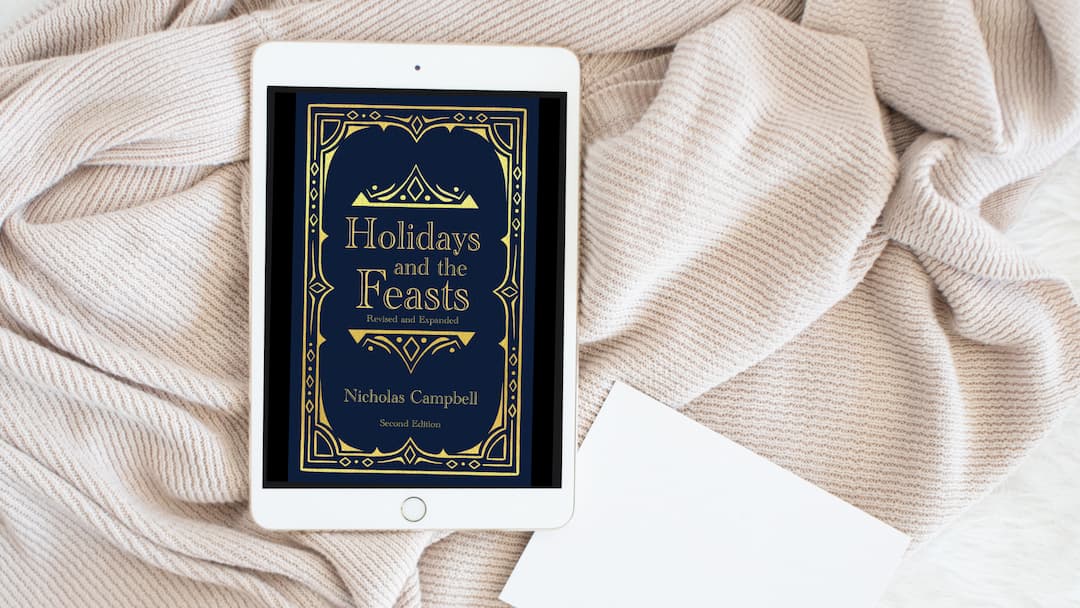
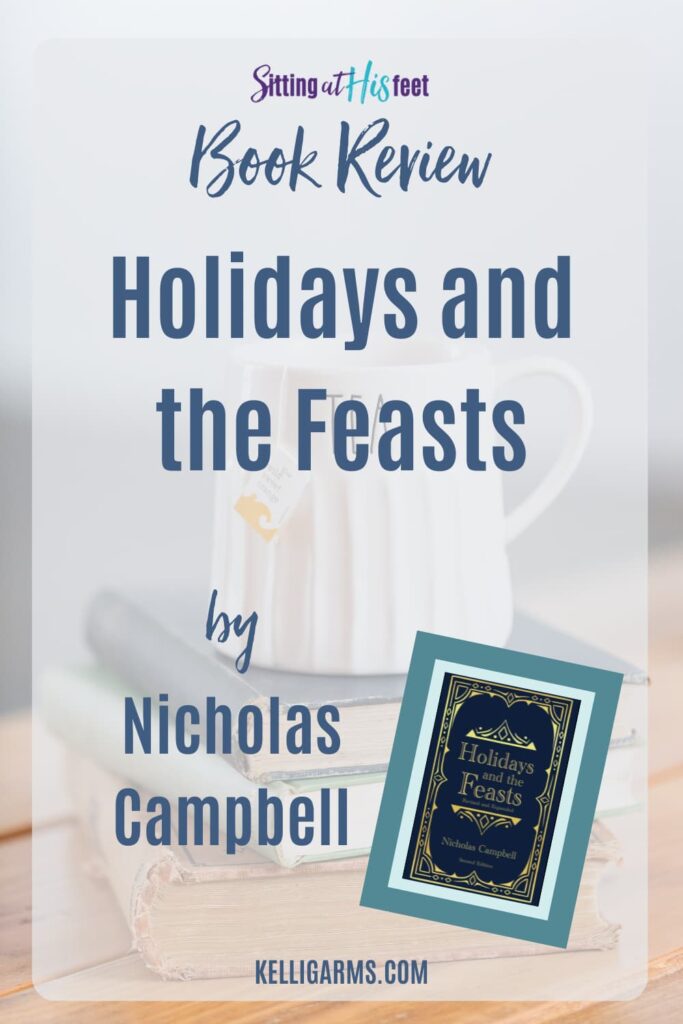
Should Christians participate in the Old Testament Jewish feasts? Is Christmas really a pagan holiday? Does the word Easter refer to a fertility goddess who is depicted with bunnies and eggs? In his book, Holidays and the Feasts, Nicholas Campbell does a deep dive into the origins of the Old Testament feasts and our modern holidays of Christmas and Easter to find the truth.
The book is based on a series of podcast episodes Campbell published at christisthecure.org. He has adapted those episodes for the book and included an additional section regarding Christians and the celebration of the Christmas holiday.
I will admit I started this book in the middle. With it being so close to the Christmas holidays, there are all kinds of claims floating around on social media, so reading the sections on Christmas was at the top of my list. One claim that made its way into my direct messages was that Christmas was originally a pagan holiday. In truth, while I had heard this before, I never really took the time to research it because, honestly, it just did not seem like a legitimate claim. But I had previously purchased and perused Campbell’s book, so I decided to take a more careful approach.
In the book, Campbell explains each of the pagan celebrations that have been cited as the origins of the Christian Christmas. He dives in to the origins of each one and why the claims have been made. He also dives in to the origins of the Christmas celebration, originally dubbed the Festival of the Nativity, demonstrating how church leaders landed on the date of December 25th, detailing the origins of Santa Claus, and even discussing peripheral icons like the Christmas tree and stockings.
Ultimately, Campbell concludes, “The threat to Christmas is not paganism, but secularism” (63). Celebrating Christmas is a matter of Christian liberty. However, “If we are going to celebrate Christmas and say that it isn’t secular, then we need to actually celebrate it as it was intended.” This means we should be doing our due diligence to make sure we are putting the emphasis of the holiday where it truly belongs.
In part 3 of the book, Campbell addresses the concern by some Christians that we should not celebrate Christmas because it was not celebrated in Scripture. He unwraps the importance of the incarnation, the purpose of celebrations, and the evidence in church history. We can stand on the shoulders of those who have gone before us into this debate about the holidays, but we have to be willing to take the time to look at the facts instead of accepting at face value what an influencer says on social media.
Once I finished the sections on Christmas, I went back to the beginning of the book and read all about the Old Testament feasts. There seems to be a current movement encouraging Christians to get back to their roots by observing these feasts. The feasts were established for the people of Israel to remember specific events in their history. Many of the feasts explained in the Torah (the first five books of the Bible) appear throughout the rest of the Old Testament. The Israelites frequently abandoned feasts only to rediscover them and celebrate them anew. Some of the feasts from the Old Testament appear in the New Testament, too. Probably the most notable of these is the Passover, the reason Christ was in Jerusalem at the time of His crucifixion.
What is most important about the feasts is they were intended to not only look at the past and remember how God had blessed His people, but also to look to the future to the promised Messiah who would fulfill the law and provide ultimate salvation. Campbell details different verses in the New Testament that point to Jesus as the culmination of the feasts. Because we have the privilege of a personal relationship with Jesus, celebrating the feasts can be a great way to rehearse Old Testament knowledge, but it should not be a source of division among Christians.
Finally, Campbell addresses some controversies about Easter, most of which center around the origins of the word Easter. As with Christmas, many of the claims about Easter are either provably incorrect, or there is no evidence to support the claim. Campbell takes each claim individually and walks the reader through his research. Not only does he research the claims against Easter, but also he dives into the origins of our Christian celebration. And he addresses the themes of Spring and bunnies floating around the holiday.
As with Christmas, the threat to Easter is more secularism than paganism. Campbell encourages us here when he says, “The world will act as we would expect, and will try to secularize anything. Additionally, the church will sometimes adopt the culture to appeal to the culture. However, regardless of how the secular world attempts to secularize the holiday, everyone is still talking about Jesus whether negatively or positively. Even when critiquing Easter and trying to change its purpose and meaning, individuals are still speaking of Jesus” (101).
Campbell states his conclusion at the beginning of the book, not by detailing his findings but by encouraging us not to be legalistic with our convictions. He admonishes us that the New Testament church was dealing with similar issues when it came to Christian liberty. And he encourages us that, “May we never become legalistic by enforcing our conscience onto others in regards to these issues” (20).
Holidays and the Feasts is a short read, but it is rich in information. I encourage you not to let this review be your source, but to read the book for yourself. No doubt you will encounter many of the controversies presented this Christmas season, and it will be a great resource for you to know how to respond when those conversations present themselves.
Let me begin by reiterating that the role of women in ministry is not a primary issue. Where you land on it does not determine whether or not you are a Christian. While I believe I can fully support and defend my position biblically, I have beloved friends who disagree with me and would say they can biblically defend their positions, too.
As I have been diving into the topic of women in ministry, one of the arguments that has come up is that women should not be submitting, even to their husbands, because submission is part of the consequences of the fall, and we should not be perpetuating “the curse” in light of Christ’s redemption. Earlier in this series, I shared my belief that the fall is responsible for our desire not to submit (you can read that post here), but is submission in general part of “the curse,” or was it part of God’s plan all along? (I put the words “the curse” in quotes because, while we call the consequences of the fall a curse, God cursed only the serpent and the ground; He didn’t curse Adam and Eve.)
Since we only have two chapters of the Bible before we learn about the fall, it shouldn’t take too long to dive in and see if there is evidence of submission on Eve’s part or authority on Adam’s part before sin entered the world. The first mention of man is in Genesis 1:26. The word translated man can also be translated mankind. This becomes clear when, later, the pronoun them is used to refer back to this antecedent. So when Scripture says God created man in His own image, it can be translated as mankind or man AND woman.
So from chapter 1 of Genesis we learn that both men and women are created in the image of God, both men and women have been tasked with replenishing the earth (which makes sense since both are needed to accomplish this), and both men and women are given dominion over the earth and its creatures. At creation, men and women are completely equal in personhood, task, and dominion. Their relationship to God and God’s creation is equal. Women have the same call as men to subdue the earth.
In chapter 2, we begin to see how they relate to each other. Let’s begin with what seems to be the most problematic part. In Genesis 2:18, God declares that He is going to make a helper for Adam because it is not good for him to be alone. And in verses 21 and 22, Eve is made from Adam’s rib while he is in a deep sleep. And her purpose is explicitly stated as that of “a helper fit for him.”
This is typically where I’ve seen women speak up in disgust. The reason for this offense is we have made the word helper mean something it doesn’t. To us, the word helper implies inferior. He is the protagonist, and she is just there to help him shine. We can look back at the original Hebrew to try and calm women down, but honestly, the translation helper is pretty accurate. The Hebrew word is עֵזֶר [ʿēzer], and it simply means “one who helps.” But what can make a difference in how we interpret this word ʿēzer is looking at where else Scripture uses it.
Repeatedly in Scripture, the word ʿēzer is used of God and the Holy Spirit. In fact, only twice out of the twenty one times it is used in the Old Testament is it used to describe the woman. Sixteen of those twenty-one times it is used of God as a helper to His people. A couple of examples are Psalm 33:20 and Hosea 13:9. If God can be described as a “helper,” why do we get so put off by being described as helpers? He is obviously not inferior nor is He only there to help us shine.
Something else we seem to overlook in this verse is that the man needed a helper “fit for him.” The helper is not stronger or weaker, but is complementary to the man. In any case, it is clear that one only needs a helper when he cannot do the task alone. It is safe to conclude that calling the woman a helper carries no sense of inferiority or subordination. Thus far, there is nothing to indicate submission prior to the fall, but let’s continue.
In verse 7, we are told that God created man from the dust. It is interesting to see in verse 19 that all of the beasts were created from the ground. While God spoke everything into being, He used the ground to create not only man, but also all of the animals. Not so with the woman; she was made from Adam’s side.
I’ve heard many speculations about this throughout the years. Most center around the idea that Adam would instinctively protect his side and that is why God chose to make woman out of his rib. I’ve heard many preachers assert that she was not made from his feet so he couldn’t walk all over her, and she was not made from his head so she wouldn’t rule over him, but she was made from his side where he would embrace and protect her. Scripture doesn’t really explain this, but it is interesting that only she was made from man’s rib.
We also see in verse 16 that God gave Adam the instructions about the tree of the knowledge of good and evil. If He gave Eve these same instructions, it is not recorded for us. So we can infer that God gave Adam the directive, and Adam in turn passed it along to Eve. In verse 19, Adam, and only Adam, is tasked with naming all of the animals. In fact, Eve had not been created yet as God used this exercise to show Adam his need of her.
Once Eve had arrived, Adam named her woman (2:23) and Eve (3:20). God could have named the woman, or He could have waited and let the man and woman name each other, but He chose to name Adam and allowed Adam to name Eve. Consistently in Scripture, the one who does the naming has the authority.
There is also the idea of the first born. While both Adam and Eve were created, not born, Moses’ Jewish audience would have understood that some authority came with being first. Throughout Scripture there is an emphasis placed on the inheritance, power, and influence of the first born. Many kingdoms have fallen as a result of family infighting because of the rights given to the first born over other children.
When we get into chapter 3 of Genesis, we find more evidence of Adam’s authority. First, when God walks in the garden after the fall, He calls Adam out first. He doesn’t address Eve until Adam has blamed her. And while Eve’s consequences for her sin affect all women, Adam’s consequences of the fall affect all of mankind. He bears greater responsibility. We see this reiterated in Romans 5:12.
In summary, it is clear that men and women are equal as image bearers, in the task of replenishing the earth, and in dominion over creation. The woman was created to help the man because he was not capable of doing the job alone. None of this points to the idea of submission.
But there does seem to be authority of Adam over Eve in the method of creation, God giving Adam the instructions meant for both of them, Adam naming Eve, Adam being created first, Adam answering to God for the sin, and the difference between their consequences after the fall.
Many have pointed to the phrase in Eve’s consequences “Your desire shall be contrary to your husband, but he shall rule over you” as the beginning of submission. If we take the passage in its entirety and look at childbirth, relationships, and the work of man’s hands, we can see that all of this was designed to be good. As always, sin distorts God’s perfect design. Because of sin, childbirth is painful, relationships have conflict, and work is difficult. These things were already part of life, but sin made them hard.
**After doing the research and coming to my own conclusions about what the Bible says about the role of women in ministry, I am settling in to hear and read what others have to say about the topic. One resource I have been enjoying is Mike Winger’s looooong series on this topic. You can access it here.
“Amazon Donates $10 Million to Black Lives Matter Organizations”
That was the headline that started it all for me. It was my “inciting moment.” Not only had small businesses shut down or been destroyed while Amazon and big box stores doubled, tripled, even 10xed their profits, but now Amazon was sharing all of that wealth with organizations I couldn’t support. That is when I started looking for ways NOT to give my money to Amazon.
In my search, I discovered the Wellness Store. I was skeptical at first because I’d been burned before. Companies that claimed to have safer products really didn’t, others that claimed to have effective products let me down, and some that claimed to be one company were actually owned by another company I didn’t want to support. So I tried different products from the Wellness Store for more than a year, and I’ve been blown away by what I’ve found!
The products at this company must meet four standards: Safe, Effective, Affordable, and Eco-Friendly. While not all of the products are 100% natural, they are all safer for my home and my family than the leading brands. Let’s face it, grass is natural, but it isn’t going to get your clothes clean! Everything I’ve tried has worked! Some of the products, like the Tub & Tile cleaner, have worked better than bleach to lift dirt and stains. I’m saving money each month by using these more concentrated products and earning free loyalty dollars. And they get delivered to my front door within a few days of placing my order.
While I would love to be that “crunchy” mom who watches every single ingredient that comes into her home, I don’t have the bandwidth for that. So instead I trust the Wellness Company to do the leg work for me! If you would like to learn more and see if the Wellness Store is the right fit for you, fill out the form below or reach out to me to chat. It may just be what you’ve been looking for!
Last week as our nation was participating in the midterm elections, my writing class was reading and discussing Harriet Beecher Stowe’s book, Uncle Tom’s Cabin. You may think these two things have nothing in common, but stick with me for a bit and let me unpack it.
Many of the issues on our ballots were a direct result of the Dobbs decision by the U.S. Supreme Court which overturned Roe v. Wade and gave the authority on the issue of abortion back to the states. And many of those ballot issues did not go the way we had hoped. Stowe wrote Uncle Tom’s Cabin in response to the Fugitive Slave Act, which gave Southerners the right to pursue their escaped slaves and prohibited assistance to runaway slaves by those in the North. Her motivation for writing this novel was political. She understood that the law was not set in stone.
I don’t want to go into a full-blown literature lesson here, but I do want to give you some context on Stowe’s novel. Many scholars attribute the abolition of slavery at least in part to the influence of Uncle Tom’s Cabin (making it ironic that it is a book banned in most government schools for issues of racism). In fact, there is a commonly accepted anecdote, unproven as it may be, that when Abraham Lincoln met Stowe at the White House shortly after the Emancipation Proclamation had been announced, he greeted her with, “So you are the little woman who made the great war.” While Stowe’s book sold 300,000 copies in its first year, and its sales were rivaled only by those of the Bible at that time, it is estimated that ten times that many people actually read the novel in the U.S. alone. Stowe brought the issue of slavery into living rooms, parlors, and even coaches and train cars. Is there anything we can learn from her book in our fight against abortion and the states that want to make it a “right”?
If you want to know more details about how Uncle Tom’s Cabin was instrumental in abolishing slavery and all of the positive and negative repercussions Stowe faced, I encourage you to do a little research. It really is fascinating, but it is not the point of this post. What I want to focus on is what Stowe included in her book that made it so effective.
Faith Should Drive Politics
First, Stowe allowed her faith to inform her worldview and, by extension, her politics. She didn’t shy away from bringing faith into the discussion. So many Christians today think we must separate our politics from our faith, and since abortion is a political issue, it must be discussed without bringing up the Bible.
My first response to this argument is that abortion is not a political issue; it is a worldview issue. And furthermore, our politics should always flow from our faith because our faith shapes our worldview and our worldview dictates how we live our lives. This includes how we vote and what causes we support. We should not be afraid to bring faith into the conversation.
Scripture tells us in Romans 1 that we know the truth, yet in our arrogance, we suppress the truth. The more we expose people to the truth, the harder they have to work to suppress it. So keep speaking the truth!
As Allie Stuckey often points out, science can tell us when life begins, but it can’t tell us why life matters. If we depend solely on secular science, we will be missing that important piece. Our faith tells us why life matters: because every person, even the baby in the womb, is made in the image of God. Without this worldview underpinning our position, we can’t explain why that baby’s life is important.
Put Flesh on the Issue of Abortion
No matter how far north Stowe’s readers lived, she brought slavery into their living rooms. It was easier for people to talk about the slaves when they didn’t know their names and their stories, when they couldn’t picture their faces and feel their sorrows. Stowe drew her readers into the lives of the slaves so they could see first hand what slavery was really like.
We can do the same thing with abortion. We need to stop using euphemisms, and start calling it what it is: murder. We even need to stop using the word abortion because that word doesn’t truly communicate the atrocity of slaughtering a pre-born baby. We need to put flesh on the issue of abortion by speaking truth, yes, even graphic truth, instead of trying to make people comfortable with the conversation. It is not “reproductive healthcare,” “fetal tissue,” or a “clump of cells.” It is a developing human, who, in most cases, is being murdered for convenience.
There were those who knew they would personally never own a slave, but they didn’t think it was their place to interfere with the economy and workings of a plantation. Once they saw flesh on the issue of slavery, they could no longer distance themselves from the discussion. The same is true with abortion. The idea that you can be personally pro-life but politically pro-choice goes right out the window when you see flesh on the issue of abortion. You begin to realize that even in those extreme situations of rape or incest, it isn’t the baby’s price to pay. That isn’t justice.
There were also slave owners who read Stowe’s book, and through her description, recognized the wickedness of which they were taking part. At the end of the novel, spoiler alert, George Shelby frees his slaves, offers to educate them, and starts paying them wages if they want to stay on his plantation. He repents of the belief that one human can own another human. In much the same way, a woman who has had an abortion, when confronted with the severity of her sin, can repent and be made new thanks to Christ’s payment for her sins. If she never accepts the full weight of her sin, she can never truly repent and be forgiven. Yes, we can be gentle and loving, but we must remember that it is a gift to speak truth to those who are suffering and dying in their sin!
Paint a Picture
Stowe’s readers could no longer find any virtue in slavery. Even the kindest slave owners did not hit the mark. If you’ve read the novel, you know that Tom’s owner, Mr. Shelby, whom Tom had known since Shelby was a boy, planned to free him and had made this known to Tom. That was his plan, that is until he fell on hard financial times. Suddenly, the reader understood that there was no true loyalty, no matter how far back they went. Once his owner sold him, Tom was at the mercy of several different owners with varying degrees of treatment. Through her writing, Stowe forced her readers to pick a side, and they did so fully informed of the barbarity slaves experienced.
Perhaps a novel is not the ideal way to communicate the atrocities of abortion to our current society. Unfortunately, I fear most wouldn’t make it through a very long novel like Stowe’s novel. But there are ways we can paint the picture for them: social media posts or graphics, descriptions of abortions, or even a video of an abortion itself. Statistics prove that women who see their pre-born baby on an ultrasound are less likely to kill the baby, so even showing ultrasound videos where the baby is wiggling or kicking can be wildly effective in convincing someone of the humanity of the pre-born. And of course, we can use our words. We can have effective conversations capable of persuading because we have truth on our side.
Remember that Stowe wrote this book in reaction to a law that was passed. That law is no longer in place. Elections come and go, and laws can come and go, too. Don’t be discouraged by laws that passed or didn’t pass during the midterm elections. While we absolutely need to take part in the political process, be informed, and exercise our right to vote, our job is to use the Gospel to change hearts. Wouldn’t it be glorious if a law became obsolete because so many hearts were changed, it was no longer needed?
There is so much more that could be said on this topic and so many other lessons we can learn from Stowe’s novel, but this is a great place to start! Don’t be afraid to speak from a biblical worldview, put flesh on the issue of baby murder, and paint a picture so people know what’s really happening. How can you start to effect change in your circle of influence?