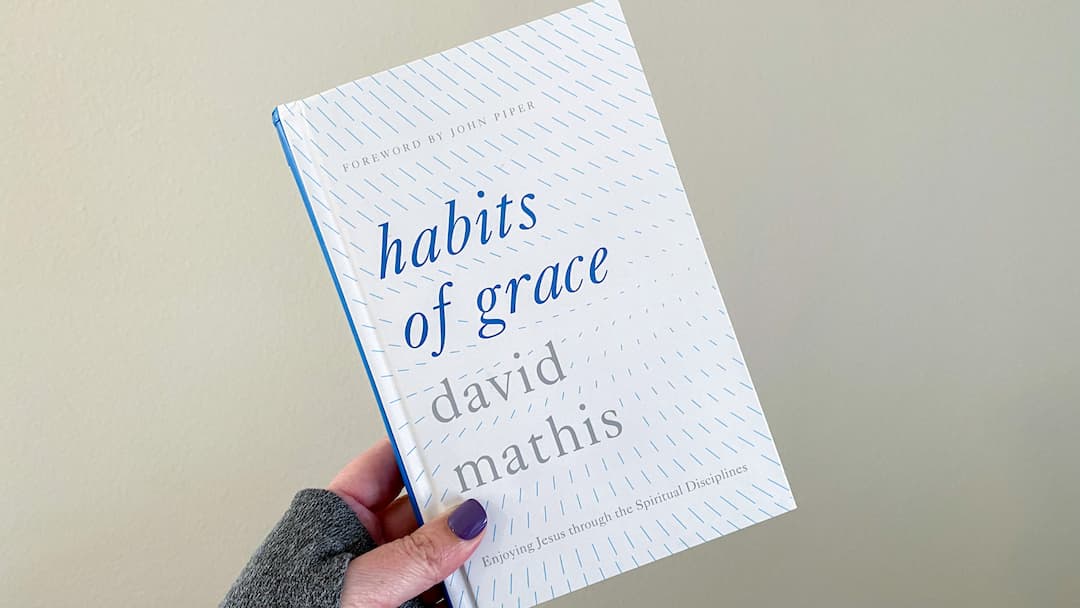
I purchased David Mathis’s book, Habits of Grace: Enjoying Jesus through the Spiritual Disciplines, when all of my business friends were reading personal development books about habits. While there is nothing wrong with the books they were recommending, I wanted a book that would help me create a spiritual routine rather than more systems for my business.
Mathis breaks the spiritual disciplines into 3 categories:
Hear His voice (Word)
Have His ear (prayer)
Belong to His body (fellowship)
Within these categories, he defines the disciplines and provides very practical suggestions for implementing them into your routine. He encourages you to spend time with God even if you can’t fit every discipline into your schedule. He also encourages you to make it about getting to know God, instead of seeking perfection or simply checking a box.
I will be implementing many of his suggestions. I am most deficient in the fellowship disciplines and will be looking for ways to do life with others better.
Each of the cases discussed, some of which were unfamiliar to me, have had serious ramification beyond the walls of the courtroom. Understanding how a Supreme Court ruling, and by extension a Supreme Court nominee, affects society as a whole was astonishing. I will be paying more attention to cases in the Supreme Court from here on out.
The book also followed Cruz’s legal and political career, creating a resumé of sorts, should he decide to run for president once again.
If you are a teacher or homeschool mom, this is a great book to use in a high school government class to supplement the curriculum.
She uses her personal story to narrow the lies down to 5: 📌”You are enough.” 📌”You determine your truth.” 📌”You’re perfect the way you are.” 📌”You’re entitled to your dreams.” 📌”You can’t love others until you love yourself.”
Stuckey affirms at the very beginning that, “the self can’t be both the problem and the solution.” Throughout the book, she shows us that we can’t find the answer to our problem, insecurity, or unfulfillment in ourselves since we are the issue. Instead, we have to turn to God and His Word to provide the solution.
In a culture where women are being told they are no different than men, there is empowerment in sexual “freedom,” and they get to choose their own destiny, this book is a needed reminder that we are most content and fulfilled when we submit to God’s authority and live as He intended.
Thomas Sowell’s book, The Quest for Cosmic Justice, explains how, in an effort to accomplish equal outcomes, society actually makes things less equal by taking away opportunities and freedoms. The resulting policies end up being detrimental to a bigger portion of society than they benefit.
While I wouldn’t call this book an easy read, it is a necessary one. It is easy to look at one side of an issue and determine what we believe is the best course of action. But we should always count the cost—the cost to people, the cost to culture, and the cost to future generations.
Sowell uses extensive research, citing present and past policies and their ramifications, to prove his arguments. He demonstrates not only how the policies created for “the greater good” can be harmful, but also how they affect a society’s global standing. While his book is academic in nature (he is an economist, after all), it is not difficult to understand as he provides background information and explains the situations well.
If you are looking to make an informed decision about your position on the social justice movement among other ideologies, this is a great resource. Are you willing to count the cost?
Voddie Baucham’s new book, Fault Lines: The Social Justice Movement and Evangelicalism’s Looming Catastrophe, is a great resource for those trying to get their footing in the ever-changing landscape of the culture. Baucham’s upbringing makes him the poster child for the social justice movement—he was raised by a single mom in gang territory in Los Angeles—yet he sees the flaws of the movement and works to educate others of its downfall.
Using the words from prominent social justice warriors, Baucham defines the terminology of the movement. Because these movements take place mostly in academic circles, he takes the time to explain their position in laymen’s terms. He takes pains to demonstrate the false information that is circulated in order to grow the movement. Then he uses Scripture to show the cracks in the arguments and the fallacies in the philosophy.
“The antiracist movement has many of the hallmarks of a cult, including staying close enough to the Bible to avoid immediate detection and hiding the fact that it has a new theology and a new glossary of terms that diverge ever-so-slightly from Christian orthodoxy. At least at first” (67).
In Fault Lines, Baucham calls out Christian leaders and teachers who have fallen prey to the cult of antiracism, but he does so with compassion and Christian love. He encourages believers who understand the errors of social justice to graciously correct brothers and sisters in Christ, and he reminds the reader that the war is a spiritual one.
If you’ve been feeling like the ground beneath your feet keeps shifting, this book will be a great resource to help you get your footing as you plant your feet firmly in God’s Word.
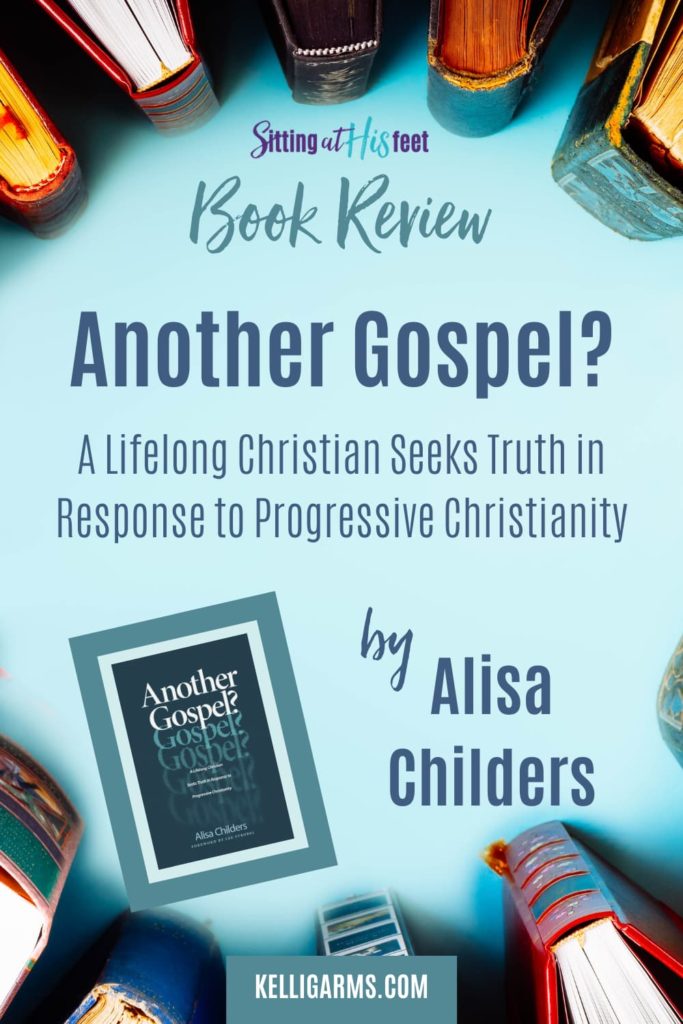
Alisa Childers tackles the difficult questions that led to the deconstruction of the Christian faith and created progressive Christianity.
Have you ever heard someone say that most of what we learn is “caught not taught”? I’ve come to realize this is how a lot of us have seen discipleship. Rather than explicitly discipling, teaching detailed apologetics, or even catechizing kids in the at at home or in the church, we hope they will “catch” enough Bible teaching to hang in there when it gets tough. Or maybe we think as long as they are saved, that’s good enough. As a result, we don’t prepare them for the questions, from others and from their own minds, that will come one day. Certainly, living out what we believe for them to see is beneficial, but we have to know what we believe before we can live it out. There must be some teaching to support the “catching.”
Having grown up a pastor’s kid, many took my discipleship as a given. It was assumed that not only did I know what I believed, but also I knew why I believed it. While it’s true I knew what I believed, and I could answer all of the Sunday school questions, I wasn’t prepared to answer those who would question the truth of Scripture itself, the source of my spiritual confidence.
“…biblical faith is not a blind leap; it involves knowledge—that God has spoken and is trustworthy.”
Reading Alisa Childers’s book, Another Gospel? A Lifelong Christian Seeks Truth in Response to Progressive Christianity, showed me I was not alone in this. Not only does she address questions with which I have wrestled–like what if Christianity was made up by a bunch of guys to see how many people they could fool?–but also she provides lengthy lists of sources so her readers can continue their research. Her presentation of the facts and evidence to support her position is thorough yet easy to read.
Childers addresses the progressive movement specifically in her book. This movement raises ideas that use the language of Christianity but originate from a questioning of what Christianity really is. They call into question the dependability of Scripture, the character of God, and the historical teachings of the Christian church. While we might be prepared to answer those who are outside the faith, we face increasing difficulty answering the questions raised by those who may know our Bible better than we do and call into questions things we have accepted at face value.
“… the Christianity I had known was deep and real and true. It wasn’t soiled by legalism or hypocrisy, ravaged by abuse, or oppressed by doubt. I wanted to progress in my faith…in my understanding of God’s Word, my ability to live it out, and my relationship with Jesus. But I didn’t want to progress beyond truth.”
Childers relates the events that took place in her own life when she was under the leadership of a progressive pastor. The process began as it usually does, with deconstructing her Christian beliefs. She defines deconstruction as “the process of systematically dissecting and often rejecting the beliefs you grew up with.” While many end the process and walk away from their faith during this phase of the journey, Childers set out to reconstruct her beliefs and find out the truth.
The questions Christians ask answered in her book:
Alisa Childers tackles the hard questions that led to the deconstruction of the Christian faith and created progressive Christianity.
What did the first Christians believe about Jesus?
What did they believe about the Scriptures?
How do we know the books in the Bible are the right ones?
Where did sin come from, and can we ever overcome it or should we even try?
What is critical theory, and what influence does it have on Christianity?
Is there absolute truth, and how do I know when I’ve found it?
How reliable is the Bible?
Does it contain any errors?
How do we recognize false teaching?
Is the Bible really God’s Word?
Is hell real?
If so, what is hell like?
Does God really send people to hell?
Why did Jesus really have to die, and who killed Him?
How can God be love and wrath at the same time?
How should a Christian handle same-sex attraction?
And so many more!
Many of these topics overlap and interconnect, so they come up over and over again in different chapters of the book. Childers tackles these difficult topics and admits when it is uncomfortable and even unpleasant. If you have ever asked any of these questions, this is a helpful resource to firmly know what you believe, why you believe it, and how to defend it.
By taking the reader back to the earliest Christian creed, helping navigate through history in the early church, and working systematically to explain each question and answer, Childers builds a foundation for a steady and solid faith. When I finished reading the book, I felt better prepared to defend my faith and answer the hard questions. It added “meat” or substance to areas where my knowledge was minimal.
Childers shows how the false teachings have infiltrated the Christian church and teaches how to recognize them. She defines the terminology that is common in the different progressive teachings and warns about subtle attacks. Ultimately, Childers proves that the false teachings give no answers and no hope.
“…progressive Christianity offers me nothing of value. It gives no hope for the afterlife and no joy in this one. It offers a hundred denials with nothing concrete to affirm.”
The depth and breadth of her research is impressive, but she manages to keep the tone and style of the book very clear and straightforward. While the book is rich with content, it was a quick and easy read, which is good for me because I will read it again and again!
Find Christian Author and Apologist Alisa Childers