One of the biggest battles Paul had to fight as he ministered to the Gentile believers (non-Jewish believers) during the early years of Christianity was the enforcement of the Mosaic law. There are many discussions in the New Testament about circumcision, eating foods sacrificed to idols, and the Sabbath, just to name a few. The Jews had followed these laws since the days of Moses, so even those who believed in Christ struggled to let them go. But more than that, they tried to impose these laws on new Gentile believers.
But, while Paul is clear that we have liberty in Christ and nothing in and of itself is unclean (unholy), he also reminds us that there are limits to our Christian liberty. Our freedom in Christ has boundaries, and he discusses these boundaries in Romans 14.
Boundary #1: It Is a Sin
We must begin this discussion by pointing out that sin is sin. Paul is not saying that we can commit sin under the guise of Christian liberty. The first two chapters of the book of Romans discuss the rebellion against God in detail, and make it clear that we are to have no part in it. Anything the Bible explicitly calls sin is off limits.
This discussion revolves around those things that some would call sin but the Bible doesn’t explicitly call them sin. Paul specifically gives the examples of which foods we eat or which days we believe to be holy days. Believer, do not try to pass off your sin as Christian liberty. It will not end well!
Boundary #2: It Is Doctrine
Paul begins the discussion by introducing it as a difference of opinion (v. 1). These are not quarrels over doctrinal issues. He is clear that false teaching is not to be tolerated within the church. If we look ahead to Romans 16:17-20, we see how Paul tells the church at Rome to deal with false teachers.
And in Galatians 1:8-9 Paul says,
“But even if we or an angel from heaven should preach to you a gospel contrary to the one we preached to you, let him be accursed. As we have said before, so now I say again: If anyone is preaching to you a gospel contrary to the one you received, let him be accursed.”
It is clear Paul gives no place to false teaching in the church. The disagreements subject to Christian liberty are about opinions or personal convictions. These are what we typically call secondary or tertiary issues. In other words, they have nothing to do with salvation or the Gospel itself.
Boundary #3: God Has Authority
While we may feel strongly about our convictions, and we may feel it is prudent for others to follow our personal convictions, other believers do not answer to us; they answer only to God. Romans 14:4 says,
“Who are you to pass judgment on the servant of another? It is before his own master that he stands or falls. And he will be upheld, for the Lord is able to make him stand.”
We do not have to agree with someone else’s convictions, we must simply remain true to our own because we will answer to God only for how we live, not how our fellow believer lives.
Can I do it in honor of the Lord?
Boundary #4: Does It Honor God?
Verse 6 really stood out to me in this chapter and caused me to ponder things I have done in the name of Christian liberty. It says,
“The one who observes the day, observes it in honor of the Lord. The one who eats, eats in honor of the Lord, since he gives thanks to God, while the one who abstains, abstains in honor of the Lord and gives thanks to God.”
First, it is clear that all parties are doing what they believe honors the Lord. Second, this would eliminate anything that we cannot do in honor of the Lord.
One example of Christian liberty I discussed in my previous post on this topic was drinking. Because of my personal convictions, I could not have a glass of wine with dinner and say that I am doing it in honor of the Lord. That doesn’t eliminate wine from everyone’s menu, but if you cannot do it in honor of the Lord, it is no longer an issue of Christian liberty but of sin.
Lately, I have seen Christians using foul language and claiming it as Christian liberty. After all, who even decided which words were curse words? This is only an issue of Christian liberty if it can be done in honor of the Lord.
What about the recent trend of not going to church, calling nature your church, or only participating in a virtual capacity. We know that the Sabbath law no longer applies to New Testament believers (the book of Hebrews tells us that Jesus is a better Sabbath), so is it wrong to “forsake the assembly” (Hebrews 10:25)? In order to discover the answer, we have to ask if it can be done in honor of the Lord.
These are all matters of personal conviction for which we will individually answer to God, not to each other (Romans 14:12). If you can drink alcohol, cuss or be crass, or not attend a physical church in honor of the Lord, then Paul says it is a matter of Christian liberty.
BUT the discussion does not end there.
Boundary #5: It Causes Someone Else to Sin
Paul describes everything as clean (Romans 14:14), but he goes on to say that even something that is right can become wrong if it puts the faith of God’s people at risk.
“Do not, for the sake of food, destroy the work of God. Everything is indeed clean, but it is wrong for anyone to make another stumble by what he eats. It is good not to eat meat or drink wine or do anything that causes your brother to stumble.”
Romans 14:20-21
Paul has painted a clear picture of Christian liberty, but even Christian liberty must be sacrificed for the benefit of others. The passage goes on to say,
“But whoever has doubts is condemned if he eats, because the eating is not from faith. For whatever does not proceed from faith is sin.”
Romans 14:23
If you do something out of Christian liberty that a weaker sister follows even though she has questions about whether or not it is sin, you have caused her to stumble because she is not doing it in faith, believing it is “clean.” So often, whether we like it or not, we have to check our Christian liberty at the door for the sake of the faith of those around us.
Application
So when you come across a situation where you and a friend believe differently about an issue, here are some questions to ask yourself before you claim Christian liberty:
Is this a sin? If the answer is “yes,” don’t do it.
Is this a matter of doctrine? If the answer is “yes,” study it out before you decide.
Can I do this in honor of the Lord? If the answer is “no,” don’t do it.
Will it cause someone else to sin? If the answer is “yes” or “maybe,” don’t do it.
I would love to know your thoughts. Have you come across any situations where you have either caught yourself judging someone else for acting out of Christian liberty or been reprimanded for doing something out of your own Christian liberty? What trends are you observing in culture that fall squarely in the realm of Christian liberty?
If you would like to learn more about how to study the Bible, I invite you to download my FREE Bible study workbook, 6 Steps to Study the Bible on Your Own at the button below.
If you would like to join a group of like-minded women who are pursuing godliness together, check out the Bible Study Academy by clicking the button below.
Have you ever caught yourself thinking about something that happened, mulling over what a friend said, or turning the story line of a book or movie over and over in your mind? Believe it or not, you were meditating on those things. Just as God created us to worship, He also created us to meditate.
“It is a distinctively human trait to stop and consider, to chew on something with the teeth of our minds and hearts, to roll some reality around in our thoughts and press it deeply into our feelings, to look from different angles and seek to get a better sense of its significance.”
David Mathis, Habits of Grace
As the Bible Study Academy ladies have been sitting in Psalm 119 during the month of May, the topic of meditation has come up in the reading over and over again. The author of the longest chapter in the Bible understood the importance of meditation and the joy and fulfillment it brought to his life even during times of anxiety, affliction, and sorrow. And the discipline of meditation caused him to fall deeper in love with the Creator.
What Is Biblical Meditation?
God created us to meditate, so of course, the enemy presents us with counterfeit meditation. While this world would have us believe meditation is about emptying our minds and finding answers within ourselves, biblical meditation teaches us to fill our minds with God’s Word and find answers in Him.
When the Bible speaks of meditation, it is describing a discipline we must practice. Yes, it is called a discipline because it is hard, and we have to practice it in order to work those muscles and get better at it. But the effort is worth it! And it isn’t hard because meditation itself is difficult. Rather, it is hard because it takes time, intention, and space, things we don’t like to invest.
With so many distractions at our disposal, it is much simpler to never give ourselves space to simply think. We don’t like to be alone with our thoughts, and this world has made it easy to avoid silence.
Meditation can be compared to savoring a meal. We are presented with the food, we observe it, smell it, chew it slowly, and enjoy the juices, spices, and flavors. The things of this world dull our spiritual taste buds, but the more we practice meditating on God’s Word, the more our tastebuds wake up and savor it—it becomes sweeter than honey, as the Psalmist says.
How Do We Practice It?
In my experience, I cannot meditate on a passage I have only read once. This is one of the reasons we, in the Bible Study Academy, spend an entire month in a book (or passage) of Scripture. We read it and reread it, allowing its words to sink into our minds and give us something to think on.
This doesn’t mean you must spend an entire month in a passage, but you need to take the time to read it more than once, maybe read it in different translations, listen to it in an audio Bible, or read it aloud. Give your brain time to ingest the Word so it has something to chew on. In his book, Habits of Grace, David Mathis says, “Christian meditation begins with our eyes in the Book, or ears open to the word, or a mind stocked with memorized Scripture” (59).
Of course, all of this requires time, so the first step is to schedule it. If you are working through a reading plan on a schedule, you may want to schedule separate time for meditating on God’s Word so you don’t feel rushed. You can choose a passage you read that morning, the passage for your pastor’s upcoming sermon, a portion of the Psalms, or any other passage between the front and back cover of your Bible.
Open your meditation time with prayer. Scripture tells us in Hebrews 4:12 that the Word of God is “living and active, sharper than any two-edged sword.” It has the power to change us and shape us, but the Bible also says that the things of the Spirit of God are spiritually discerned (1 Corinthians 2:14), which means we can’t understand them on our own; we need the help of the Holy Spirit.
Then simply think about what you read. You can journal as you mull it over, you can simply process it mentally, you can jot notes in your Bible. However you find it easiest to process your thoughts, do it. Take the time to wrestle through the hard things, those passages that don’t quite make sense or maybe don’t seem quite right.
Don’t rush it, but also don’t think that when your time is up, you have to be done. Take it with you during your day. Allow you mind to drift to it as you go about your daily tasks. Instead of creating noise in your home with your favorite television show or podcast, delight in the silence and use it to meditate.
As you end you allotted time, close in prayer. Ask the Holy Spirit to bring the passage to your mind throughout your day and week. Pray for opportunities to see the teaching in action. Ask that He would make you sensitive to how you can implement or witness the wonder of His Word lived out. You might be surprised how He answers!
A note of caution: the purpose of meditating on Scripture is not to prepare a lesson or find the perfect content for your social media account. This is a separate time from your Bible study time in which you might do word studies or consult outside research. The purpose is your personal growth. It will help you develop a thirst for God’s Word and allow you to fall deeper in love with Him, which in turn will make you want to meditate more. After all, a lover finds it easy to think about, meditate upon, the one he loves.
“He meditated on God’s Word because he loved it, and then loved it the more because he meditated on it.”
Charles Spurgeon
What Are the Results of Biblical Meditation?
While you may not always walk away with all of the right answers, meditating on Scripture will have long-term benefits for your spiritual growth.
Meditating on Scripture:
Results in being able to recall it and speak it in situations when it is needed.
Feeds your prayers, fasting, worship, and other spiritual disciplines.
Clarifies God’s will for your life today and in the future.
Helps you stand on truth when the world is spitting lies.
Makes evident your saturation in Scripture to those around you.
“What we take in by the Word we digest by meditation and let out by prayer.”
Thomas Manson
If you would like to learn more about how to study the Bible, I invite you to download my FREE Bible study workbook, 6 Steps to Study the Bible on Your Own at the button below.
If you would like to join a group of like-minded women who are pursuing godliness together, check out the Bible Study Academy by clicking the button below.
One thing that really jumped out at me as I have been studying the book of Genesis is the difference between how Sarah treated Hagar’s son and how Rachel treated the sons of Bilhah. Culturally speaking, Ishmael was Sarah’s son and Dan and Naphtali were Rachel’s sons (though the Bible clearly specifies who the mothers truly are), yet while Rachel seems to have accepted the boys as her sons, Sarah completely rejected Ishmael.
We find Sarah’s story in Genesis 16 and 21:8-21. Abraham and Sarah had been married for a long time, and they were both getting old, but they had no children. God had promised Abraham that He would make Abraham a great nation, but with each month that passed, Sarah wasn’t pregnant. She eventually hatched the plan to give her servant Hagar to Abraham so Sarah could have a child through Hagar. Even though her plan worked, Sarah was more miserable than before. Genesis 16:4 tells us that, “when [Hagar] saw that she had conceived, she looked with contempt on her mistress [Sarah].” Sarah went so far as to treat pregnant Hagar so harshly that Hagar fled into the wilderness. The angel of the LORD found Hagar, told her she would have a son, and convinced her to go back to Sarah.
Rachel’s story is a little more complicated because she was Jacob’s second wife. We read all of the details in Genesis 29:9-30:24. Jacob was in love with Rachel, and he worked for her father, Laban, for seven years as a condition to marry her. But on their wedding night, Laban switched Rachel out for Leah, her older sister. A week later, Jacob married Rachel with the requirement that he work for Laban another seven years. Before we know it, Leah started having children, but Rachel was barren. After Leah had four sons, Rachel gave her servant Bilhah to Jacob in desperation, so she could have children through Bilhah. Bilhah had two sons, and this seemed to appease Rachel somewhat. There is no indication in the text that Rachel mistreated Bilhah or rejected her sons.
As I read and reread these passages, studying the book of Genesis, I realized that their situations, though similar, were also very different. From the beginning of her marriage, Rachel had watched her sister bear son after son. Jacob and Rachel had no children, but it clearly wasn’t a problem with Jacob. Rachel had to accept early on that she could not have children.
Sarah, on the other hand, was Abraham’s only wife. For their entire marriage, there was always the question: was Abraham sterile or was Sarah barren? Culturally, the blame always fell on the wife, but I imagine Abraham and Sarah had this conversation periodically throughout their marriage. All doubt was removed the second Hagar announced she was pregnant. The couple’s infertility issues lay squarely on Sarah. This could surely cause Sarah to lash out, as she did, not only at Hagar, but also at Abraham. It also explains her bitter laughter when the three visitors tell Abraham that Sarah will have a child after she has already gone through menopause (Genesis 18:9-15).
While this realization broke my heart for Sarah, it was also sobering to recognize this was pain of her own making. While the suffering she faced in infertility was something God would use for His glory, the suffering she experienced by watching Hagar bear Abraham a son was a natural consequence of her lack of faith. God had already promised to make Abraham and Sarah a great nation, but He wasn’t moving fast enough for Sarah. Perhaps she thought she needed to help the plan along. Perhaps she thought God gave her this scheme to use Hagar. Perhaps she thought the promise was only for Abraham, and not for her, too. As a result, she got ahead of God. It is clear that Abraham developed a relationship with Ishmael, Hagar’s son, which probably strained his marriage with Sarah. And we see that she allowed this pain to take root in her heart and turn in to bitterness. How much sweeter would it have been when she gave birth to Isaac if she had simply trusted that God would do what He promised in His time? How much heartache would she have spared herself, Abraham, Hagar, and the nation of Israel if she had believed God is faithful?
While Rachel’s story is not exactly a romantic fairy tale—after all, Leah and Rachel barter for sex with Jacob over some mandrake fruit (Genesis 30:14-16)—Rachel dealt with her insecurities very early on in her marriage, and she was always especially treasured by Jacob to the detriment of his children. I could write an entire post about Leah’s relationship with Jacob. Suffice it to say, though Jacob always chose Rachel, in the end God chose Leah by placing Judah, her son, in the lineage of Christ.
There are several lessons for us in the account of Sarah. Throughout the entire book of Genesis, God repeatedly says “I will.” The fulfillment of God’s promises is wholly and completely dependent on Him, not us. We don’t need to make our own plans, come up with schemes, or kick down doors. That never works in our favor and is often detrimental not only to us, but also to those around us.
You might be asking why the Bible is full of stories of barren women. After all, God promised to make Abraham a great nation, yet he was married to a woman who would give him one son in their old age. Not quite the same as the number of stars in the sky and grains of sand as he was told. When Sarah laughed at the prophecy of the visitors in Genesis 18, they asked a very important question in response: “Is anything too hard for the LORD?” God chose to use barren women, even one who had already gone through menopause and was ninety years old, to demonstrate that no, nothing is too hard for Him. There was no question in anyone’s mind about the birth of Isaac being a miracle. It was why Abraham could “rise early in the morning” eager to obey God when God commanded him to sacrifice Isaac, the promised child of the father of the Israelites.
While the story of Sarah tugs at our heartstrings, especially as women, God teaches these lessons again and again throughout the book of Genesis and beyond. We see it in Isaac’s life, Jacob’s story, and Joseph’s drama (and oh, what a drama it is!). God’s plans will not be thwarted by our interference. He will fulfill His promises because of Who He is. Nothing is too hard for the Lord!
Are you trusting Him in your life, or are you trying to take the lead, hoping He backs you up?
Last week as our nation was participating in the midterm elections, my writing class was reading and discussing Harriet Beecher Stowe’s book, Uncle Tom’s Cabin. You may think these two things have nothing in common, but stick with me for a bit and let me unpack it.
Many of the issues on our ballots were a direct result of the Dobbs decision by the U.S. Supreme Court which overturned Roe v. Wade and gave the authority on the issue of abortion back to the states. And many of those ballot issues did not go the way we had hoped. Stowe wrote Uncle Tom’s Cabin in response to the Fugitive Slave Act, which gave Southerners the right to pursue their escaped slaves and prohibited assistance to runaway slaves by those in the North. Her motivation for writing this novel was political. She understood that the law was not set in stone.
I don’t want to go into a full-blown literature lesson here, but I do want to give you some context on Stowe’s novel. Many scholars attribute the abolition of slavery at least in part to the influence of Uncle Tom’s Cabin (making it ironic that it is a book banned in most government schools for issues of racism). In fact, there is a commonly accepted anecdote, unproven as it may be, that when Abraham Lincoln met Stowe at the White House shortly after the Emancipation Proclamation had been announced, he greeted her with, “So you are the little woman who made the great war.” While Stowe’s book sold 300,000 copies in its first year, and its sales were rivaled only by those of the Bible at that time, it is estimated that ten times that many people actually read the novel in the U.S. alone. Stowe brought the issue of slavery into living rooms, parlors, and even coaches and train cars. Is there anything we can learn from her book in our fight against abortion and the states that want to make it a “right”?
If you want to know more details about how Uncle Tom’s Cabin was instrumental in abolishing slavery and all of the positive and negative repercussions Stowe faced, I encourage you to do a little research. It really is fascinating, but it is not the point of this post. What I want to focus on is what Stowe included in her book that made it so effective.
Faith Should Drive Politics
First, Stowe allowed her faith to inform her worldview and, by extension, her politics. She didn’t shy away from bringing faith into the discussion. So many Christians today think we must separate our politics from our faith, and since abortion is a political issue, it must be discussed without bringing up the Bible.
My first response to this argument is that abortion is not a political issue; it is a worldview issue. And furthermore, our politics should always flow from our faith because our faith shapes our worldview and our worldview dictates how we live our lives. This includes how we vote and what causes we support. We should not be afraid to bring faith into the conversation.
Scripture tells us in Romans 1 that we know the truth, yet in our arrogance, we suppress the truth. The more we expose people to the truth, the harder they have to work to suppress it. So keep speaking the truth!
As Allie Stuckey often points out, science can tell us when life begins, but it can’t tell us why life matters. If we depend solely on secular science, we will be missing that important piece. Our faith tells us why life matters: because every person, even the baby in the womb, is made in the image of God. Without this worldview underpinning our position, we can’t explain why that baby’s life is important.
Put Flesh on the Issue of Abortion
No matter how far north Stowe’s readers lived, she brought slavery into their living rooms. It was easier for people to talk about the slaves when they didn’t know their names and their stories, when they couldn’t picture their faces and feel their sorrows. Stowe drew her readers into the lives of the slaves so they could see first hand what slavery was really like.
We can do the same thing with abortion. We need to stop using euphemisms, and start calling it what it is: murder. We even need to stop using the word abortion because that word doesn’t truly communicate the atrocity of slaughtering a pre-born baby. We need to put flesh on the issue of abortion by speaking truth, yes, even graphic truth, instead of trying to make people comfortable with the conversation. It is not “reproductive healthcare,” “fetal tissue,” or a “clump of cells.” It is a developing human, who, in most cases, is being murdered for convenience.
There were those who knew they would personally never own a slave, but they didn’t think it was their place to interfere with the economy and workings of a plantation. Once they saw flesh on the issue of slavery, they could no longer distance themselves from the discussion. The same is true with abortion. The idea that you can be personally pro-life but politically pro-choice goes right out the window when you see flesh on the issue of abortion. You begin to realize that even in those extreme situations of rape or incest, it isn’t the baby’s price to pay. That isn’t justice.
There were also slave owners who read Stowe’s book, and through her description, recognized the wickedness of which they were taking part. At the end of the novel, spoiler alert, George Shelby frees his slaves, offers to educate them, and starts paying them wages if they want to stay on his plantation. He repents of the belief that one human can own another human. In much the same way, a woman who has had an abortion, when confronted with the severity of her sin, can repent and be made new thanks to Christ’s payment for her sins. If she never accepts the full weight of her sin, she can never truly repent and be forgiven. Yes, we can be gentle and loving, but we must remember that it is a gift to speak truth to those who are suffering and dying in their sin!
Paint a Picture
Stowe’s readers could no longer find any virtue in slavery. Even the kindest slave owners did not hit the mark. If you’ve read the novel, you know that Tom’s owner, Mr. Shelby, whom Tom had known since Shelby was a boy, planned to free him and had made this known to Tom. That was his plan, that is until he fell on hard financial times. Suddenly, the reader understood that there was no true loyalty, no matter how far back they went. Once his owner sold him, Tom was at the mercy of several different owners with varying degrees of treatment. Through her writing, Stowe forced her readers to pick a side, and they did so fully informed of the barbarity slaves experienced.
Perhaps a novel is not the ideal way to communicate the atrocities of abortion to our current society. Unfortunately, I fear most wouldn’t make it through a very long novel like Stowe’s novel. But there are ways we can paint the picture for them: social media posts or graphics, descriptions of abortions, or even a video of an abortion itself. Statistics prove that women who see their pre-born baby on an ultrasound are less likely to kill the baby, so even showing ultrasound videos where the baby is wiggling or kicking can be wildly effective in convincing someone of the humanity of the pre-born. And of course, we can use our words. We can have effective conversations capable of persuading because we have truth on our side.
Remember that Stowe wrote this book in reaction to a law that was passed. That law is no longer in place. Elections come and go, and laws can come and go, too. Don’t be discouraged by laws that passed or didn’t pass during the midterm elections. While we absolutely need to take part in the political process, be informed, and exercise our right to vote, our job is to use the Gospel to change hearts. Wouldn’t it be glorious if a law became obsolete because so many hearts were changed, it was no longer needed?
There is so much more that could be said on this topic and so many other lessons we can learn from Stowe’s novel, but this is a great place to start! Don’t be afraid to speak from a biblical worldview, put flesh on the issue of baby murder, and paint a picture so people know what’s really happening. How can you start to effect change in your circle of influence?
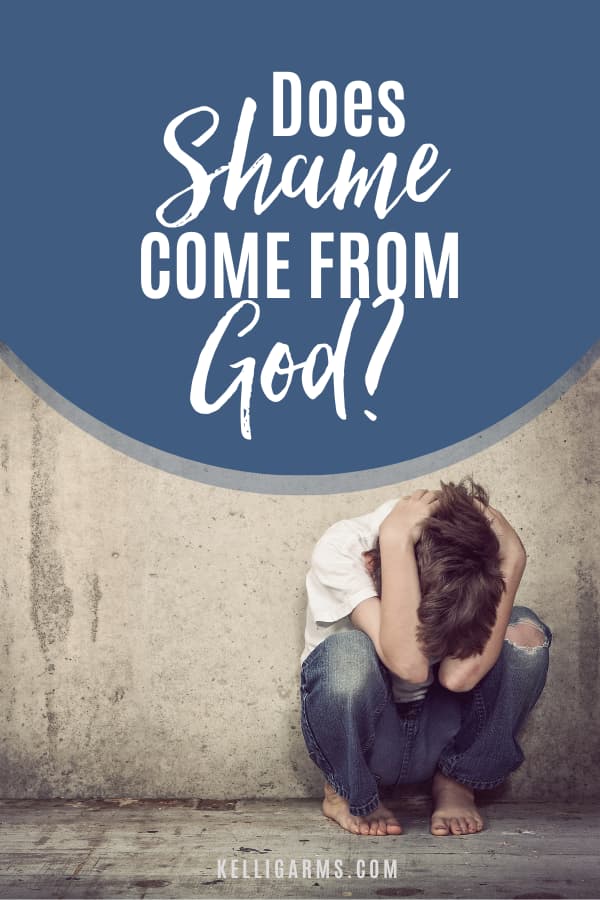
I recently heard a Christian influencer with a large following repeat a worn out encouragement. She said conviction comes from God, but shame comes from Satan. The first time I heard this, I remember thinking it sounded great. But just because something sounds good doesn’t mean it is biblical. What is implied in this statement is, if you feel ashamed, even if it is legitimate shame over sin, it did not come from God because God doesn’t shame us.
While it is true that, once God has forgiven us, we shouldn’t keep coming back to our shame as we are known to do, it is one of the tools God uses to call sinners to repentance. Believing that any shame you feel is not from God is a lie that only serves Satan. If he can keep you believing that all shame you feel is from him, it will never drive you to repentance. The truth is Scripture gives us examples of God shaming people to draw their attention to their sin.
Examples of Shame
Jesus shamed the Pharisees when He called them white-washed tombs and brood of vipers. He was shaming them when he overturned the tables in the temple and told them they were turning His house into a den of thieves. In Ezekiel, we are told that Israel needed to be ashamed of their iniquities (43:10). In Hosea, God promised to change Israel’s glory into shame because of their sin (4:7). First Corinthians reminds us that God uses the foolish things to shame the wise and the weak things to shame the strong (1:27). And Paul tells the believers in Thessalonica that if anyone doesn’t obey the words of Scripture, they should have nothing to do with that person, “that he may be ashamed” (2 Thessalonians 3:14).
Of course, shame is not the only tool God uses. When He met the woman at the well, she had experienced enough shame, so He used compassion instead. The same is true of the woman caught in adultery. She already felt her shame, so Christ did not pile it on. But when we come across people who think they know better than God, like the Pharisees who had added rules to God’s law that oppressed God’s people, shame is the appropriate instrument.
Where there is no shame, the private becomes a spectacle, what was wrong becomes right, and what was evil becomes praiseworthy. When we look around our world today and see women wearing barely a stitch of clothing while they twerk on a public stage, or men dressed up in caricature costumes of women dancing lewdly for children, or the number of women who are choosing abortion so they can be free to live their immoral lifestyles without consequences, I would say we could use some shame!
And that is the point: we ought to be ashamed of sin. When we think we know better than God and refuse to submit to His authority, we ought to be ashamed. Paul seems to be describing our current society when he says to the Philippians, “Their end is destruction, their god is their belly, and they glory in their shame, with minds set on earthly things” (3:19 ESV).
This same Christian influencer who repeated this belief about shame claims that while she doesn’t meet the standards of the church, she still meets God’s standards. As a result, she speaks out against the church, God’s given method for community among believers, as an oppressive institution. This sounds very close to believing she knows better than God as she seeks to destroy His church. And this is the very situation where some shame is warranted.
What Is Shame for?
Perhaps where we err when it comes to shame is not in that we don’t use this tool God gives, but that we use it wrongly. The goal of shame is not to lord it over someone in an “I am right, and you are wrong” way. It is not to pile on when that person has already recognized she ought to be ashamed. The goal of shame is to call sinners to repentance. Shame should drive us toward Jesus and His forgiveness. It should not be used as a club to hit someone over the head when she is already convinced of her guilt.
While we should be ashamed of our sin and lay it at the feet of Jesus never to pick it up again, we should not be ashamed of standing for the truth in a world that wants to bully us into complying with lies. Mark 8:38 reminds us that if we are ashamed of God, He will be ashamed of us. As long as we keep our eyes on Him, we will not be put to shame (Psalm 119:6). We should not be ashamed of suffering for the cause of Christ (1 Peter 4:16), and we should not shrink back in shame from God but abide in Him (1 John 2:28).
So, friend, how do you know if your shame is from God or Satan? Evaluate the cause of the shame. Are you ashamed because of sin? Let that shame drive you to the feet of Jesus where you can lay that sin down. Are you ashamed because you are standing alone on truth in a sea of lies? Stand boldly because that shame is not of God but of this world, and you will be rewarded. Stop letting the world tell you how God works and what He does. Turn to Scripture for truth.
Few things are as controversial in the Christian world as music—though I believe Halloween might give it a run for its money—and I will fully admit that I am a music snob. I grew up in a musical family, and both of my kids have inherited that same affinity. In college, I minored in church music. And, until recently, I have always been part of a praise team, choir, or singing specials at church. Music is in my blood.
As I have grown in discernment and increased my biblical worldview, I have had to reevaluate the types of music I will play in our home. I vividly recall listening to secular music when Mark and I were first married. I started paying attention to my mood and my expectations of people when I would listen to Christian music instead, and the results were very interesting. Music does affect us! It helps us memorize the good and the bad. It sets the tone for our environment. It can even attach itself to pleasant or hurtful memories. And often, we are unaware of the sway it has over us.
In the last few years, our family has visited many different churches, and one of the things we have noticed is the variety of song services during the churches’ worship services. We participated in services where the music was acapella. Others only sang Psalms. Others sang songs that came straight from Scripture and were unfamiliar to us. Most used the song service to “set a mood” for the upcoming sermon. One in particular seemed to just put on a show, singing songs with little to no substance and a ridiculous amount of phrase repetition. It was obvious which churches placed a high importance on the songs they sang and which ones only wanted to entertain, paying little heed to the words they were singing.
Gone are the days when we could simply trust a “Christian” label on a song. With so many false teachers infiltrating the ranks of Christianity and so much worldliness taking over the Christian music scene, it is important that we know how to evaluate music. It is easy to get caught up in the melody, the sticky lyrics, or the good “vibes” we get from the song and not recognize that we are not worshipping God at all.
Christian Music and Worship
First, it is imperative that we understand music is not evil. All throughout Scripture, we are told to worship God with Psalms, hymns, and spiritual songs. The longest book in the Bible, Psalms, is a book of worship songs the Jews sang as they set themselves apart from the world. David, a man after God’s own heart, was a gifted musician, called upon to soothe Saul’s spirit when he was out of sorts. And instruments are also not evil; the Bible mentions all kinds of musical instruments by name that were common during that time, lending to the assertion that we can use instruments common in our time. The Israelites were encouraged to use their instruments and their musical talents, even dancing, when they worshipped. While music and instruments can absolutely be used to draw people away from God, they can absolutely be used to draw people towards God, too. And there is nothing inherently more spiritual about an organ over a guitar. Both can be used to worship evil, and both can be used to worship God.
Besides worshipping God, there is another purpose to the song service: spiritual instruction. Our worship of God becomes deeper and more meaningful when we learn more about Him. As I mentioned earlier, music helps us memorize. That is why a song we heard on Sunday can stay with us all throughout the week. Therefore, we should be using the time during the music service to help in the spiritual growth of the congregation. This is why it is more important for a song to have doctrinal substance than a catchy tune.
Music is not the only way to worship. For some reason in our society, the “song service” and the “worship service” have become synonymous, but the song service is only a part of the worship service. The prayer, the sermon, the invitation, even the offering are ways we can worship God during the church service. And our worship is not limited to our time in church. Everything we do throughout every day of the week can be an act of worship. We can change diapers, make meals, do laundry, go to our jobs, drive down the road, play games, and sleep to the glory of God.
The Object of Our Worship
As with everything man gets his hands on, worship can be perverted. We need to evaluate the object of our worship. The music portion of the worship service in our churches is meant as a time to worship God. Unfortunately, many modern songs twist this purpose and worship “me,” “I,” and “myself” instead of worshipping God. If the song is about who I am, how God makes me feel, how I define God, or what God can do for me, then it is not worshipping God, it is worshipping me.
Not only can a song be twisted to worship self, but also it can be manipulated to simply elicit an emotional response. There are many songs that make us feel something. Maybe the music builds in a certain way as to increase our feelings of worship, causing us to close our eyes, stand spontaneously, or raise our hands. Maybe the lyrics strike a chord with us based on a particular circumstance in our lives at that time. Maybe the song lends itself to dramatic outbursts or added musical trills and runs. But, friend, we must keep our eyes on the intended object of worship! Emotional responses are fickle. Our emotions should follow our knowledge of who God is, not a fabricated, momentary feeling.
Christian Music for the Congregation
We should also consider what makes a good congregational song. If the goal of the song service is to lead the congregation to worship in unity, then the songs we choose to sing as a congregation should lend themselves to congregational singing. When there is a solo or the music leader strays from the melody, this causes confusion rather than unity in the assembly. One of the reasons hymns have been so popular throughout the years is because most of them are predictable. Even if you have never heard a particular hymn before, the melody often follows common musical patterns, so it is easy to pick up. Unlike most modern worship songs, hymns are repetitive in melody but not in lyrics. This makes them easy to learn, too. Contemporary worship songs often have difficult transitions, bridges, or vocal ranges making them more of a distraction and less conducive to congregational worship. Please don’t misunderstand me, not all hymns are good and not all contemporary choruses are bad. Each song should be evaluated independently before we choose to sing it in our churches.
The Origin of the Music
Finally, we must consider the origin of the song. Who wrote it? What affiliation do the songwriters have? What other kinds of songs do they write? The importance of these questions is two-fold. There is a practical, financial side to consider, and there is a spiritual-health-of-the-congregation side to consider.
Let’s start with the practical side. We live in a time when we value private ownership not only of property, but also of ideas. Being accused of plagiarism is no small thing, and using someone’s intellectual property without their permission is stealing. As a result, there have been checks and balances set up to ensure an artist is financially compensated when his song is played—as he should be.
Christian Music and Stewardship
We are called to be good stewards of the money God provides us, both on a individual level and as a church body. I don’t want to get into the weeds on this, but churches purchase a license to use an artists songs, and as individuals, we either purchase the song or listen to it on a membership platform like Spotify or Apple Music, all of which we pay to use. This is a way to ensure the artists are compensated each time we play or use the song. So when we play a song on one of these platforms or we sing a song in church, we are financially supporting that artist and should consider if that is good stewardship of the money God has provided.
Each church should make this decision prayerfully, but I will share my position on this. An individual artist or band who is not affiliated with a larger organization can learn and grow during a musical career, so picking and choosing individual songs that are doctrinally sound from those artists whose lifestyle and teaching align with Scripture is acceptable. Of course, if you find that they have made a statement that goes against Scripture, supporting their ministry should end until such time as they repent.
A band that is affiliated with a larger organization or ministry should be regarded with more scrutiny. When we financially support a band that is part of a church or ministry, our money may not stay simply as a support of the music portion of that organization but may be used to finance other endeavors. For example, Bethel Music is part of Bethel Church, which includes a ministry training facility. When I support Bethel Music, my money may well be used to fund the training facility. What does that organization teach? Does it align with Scripture? Would we invite that pastor to preach behind the pulpit of our church? If not, we should not be supporting that ministry with our dollars.
When we consider adding a song to our church’s music service that comes from one of these bands, we also need to look at their entire repertoire of music, not just the one song in isolation. When we look at the entirety of their work, do they only sing about those attributes of God that make us feel good, like His love, mercy, and goodness? Or do they also sing about His justice, holiness, and righteousness? Do they ever mention His wrath or His power? Just like a lie of omission (telling only part of the story) is a sin, singing only about the parts of God we like paints only half of the picture.
Christian Music and the Assembly
Perhaps we think we can still pick and choose songs that don’t meet this sniff test because that one song is just so good and the lyrics are spot on. Let’s consider the effect that could have on the spiritual well-being of the members in the assembly. One of the church members absolutely loves the song and looks it up online to find the artist. As soon as she find it, she adds it to her Spotify playlist and begins listening to it on repeat. She loves the song so much that she downloads the entire album, she goes to YouTube and searches the artist, and then she begins listening to sermons preached by the pastors in that organization. Suddenly, you have a member of your congregation falling into false beliefs which cause her to deconstruct her faith.
The music we encourage our church members to listen to is no light issue, friend! The song service should be just as concerned about the spiritual growth of the assembly as the sermon portion of the service. The music pastor should be more pastor than musician, weighing everything he brings to the congregation against the teachings of Scripture.
Conclusion
I know this is a heavy and controversial topic, and if you have read this far, I commend you! I encourage you to do the research and come to your own conclusions about the music you choose to play in your home. You may have convictions about music that your pastor or music minister don’t share. Like I said at the beginning, I consider myself a music snob and have dealt with this situation repeatedly. Prayerfully consider which aspects can be covered in love, which aspects should be addressed, and which aspects are deal breakers for you.
Ultimately, God is sovereign, and He can redeem those things the enemy intends for evil. While this is not a salvation issue, we are told in James 4:17 that it is a sin to know the right thing to do and not do it. That applies in every area of our lives, including the music we listen to and sing.