Ordering Your Private World by Gordon MacDonald is a great read! He begins the book by explaining the difference between our public worlds, where we tend to invest most of our energy, and our private worlds, the battleground of our lives.
He helps the reader distinguish between being driven, with all of its pitfalls, and being called and how that calling can change. MacDonald also breaks down many of the spiritual disciplines including journaling, meditation, and prayer. The book had a bit of a slow start, but was a helpful read overall.
My favorite chapter was chapter 8: The Better Man Lost. In it, MacDonald discusses the importance of thinking and training the mind. We do this through listening, reading, and study.
Do your eyes glaze over when you encounter a genealogy in your Bible reading? Do you gloss over them or skip them altogether? Here is a short list of things biblical genealogies teach us and how we can approach them.
Genealogies are sprinkled throughout the Bible. Some books contain big portions of these lists of names and all of their descendants. If you’re like me, you tend to get hung up on how to pronounce some of the more difficult names. It is easy to get discouraged with Bible reading when you don’t understand why the genealogies are there.
As I’ve been reading through the Bible, I’ve encountered genealogies throughout, but when I landed in 1 Chronicles, and I saw chapter after chapter of lists, I decided to do some research. I wanted to understand why God included these lists for us in His Word.
Let me encourage you and challenge you not to gloss over genealogies as you come across them in Scripture. 2 Timothy 3:16 says,
“All Scripture is breathed out by God and profitable for teaching, for reproof, for correction, and for training in righteousness.”
(ESV)
Genealogies are not an exception to this verse, so they are profitable for us to read and study. This begs the question: What do genealogies teach us?
Genealogies Teach Us There Is Only One Race
One of the most important things genealogies teach us is that there is only one race—the human race. Especially given the current climate in our society, it is important to recognize that we can all trace our lineage back to Noah, and from Noah back to Adam. God was careful to show us in Scripture that He did not create different races. In fact, in reading the history of the Tower of Babel, we are shown that ethnicities were originally divided along language lines, not skin colors.
Genealogies Demonstrate God’s Faithfulness To Fulfill His Promises
In Genesis, God promised Abraham that He would make Abraham a great nation. God told him he would have descendants that would be like the grains of sand or the stars in the sky. When God gave us the book of Numbers and the genealogies thereafter, He showed us that He kept this promise.
Even through the captivities Israel survived (these were consequences for turning away from God), God’s faithfulness remained. When the Hebrews came back to the promised land, genealogies served to give the land back to the rightful tribes. God proved that He cares about restoration. Because the Israelites had genealogies, they could prove their identity as Jews and, for some, that meant proving their calling as Levites or priests.
God Doesn’t Show Favoritism, and He Does the Choosing
If you take some time to read the genealogies carefully, you’ll realize there are names included that seem not to fit. In the midst of the lists of names, we find names of women and names of Gentiles (non-Jews). While God was fulfilling His promise to Abraham to make him a great nation, He included unlikely people and grafted them into the Israelite family. An Israelite would never have chosen Ruth, a Moabite, to be the great grandmother of King David, yet God chose her to be in the lineage of the prophesied Messiah.
God Cares about Individuals
Take a moment to ponder that God lists his people by name. While the names are strange and difficult for us, He knows each one of them. He knows who they are and who their children are. Isaiah 43:1 says,
“But now thus says the Lord, he who created you, O Jacob, he who formed you, O Israel: ‘Fear not, for I have redeemed you; I have called you by name, you are mine.'”
(ESV)
And Psalm 139:16 tells us,
“Your eyes saw my unformed substance; in your book were written, every one of them, the days that were formed for me, when as yet there was none of them.”
(ESV)
God cares about us individually, He knows what is going on with us, and He knows what will happen in our future.
Genealogies Confirm Prophecy
Several genealogies in Scripture are there to prove that Jesus fulfills the prophecy of the Messiah. They show that Jesus was a descendant of David, and that He fulfills the words of Isaiah and other prophets in the Old Testament. Genealogies used in the Gospels are there to show who Christ is with the focus that specific Gospel has. He is the prophesied King, He is the Son of God.
Importance of Family
One important lesson we can learn from genealogies is the value Scripture places on the family. We are instructed to talk about God’s Word with our children:
“You shall teach them diligently to your children, and shall talk of them when you sit in your house, and when you walk by the way, and when you lie down, and when you rise.”
Deuteronomy 6:7 (ESV).
And we are promised blessings when we do—and not just any blessing, but blessings to a thousand generations:
“Know therefore that the Lord your God is God, the faithful God who keeps covenant and steadfast love with those who love him and keep his commandments, to a thousand generations.”
Deuteronomy 7:9 (ESV)
God knows you and your children by name. He cares about you and them. He doesn’t show favoritism based on your past or your circumstances. He is in control of your present and future. And you can trust Him. That is what genealogies teach.
This list is not exhaustive, but it’s a great place to start as you approach genealogies in Scripture. And they become even more interesting when you research meanings of names and the lessons taught through individual lives.
While the Trinity is something we may never be able to completely understand this side of Heaven, Reeves explains what each member of the Trinity does, how the Trinity works together, and how the members of the Trinity complement one another. He also draws out how only a triune God can be everything God claims to be in His Word in contrast to the gods of other religions.
This book was a quick and interesting read (though when he quotes other theologians, the language can be a bit difficult). I highly recommend it to new and even seasoned Christians because Reeves presents ideas I had never heard in my 40 years as a believer.
Owens not only relates her own family stories and experiences, but she also takes the reader through America’s history and the intentional steps that have been taken by the government to keep Black Americans enslaved. While this book came out before the election and is an argument to re-elect President Trump, it’s message continues to resonate as we watch the current administration undo so much of what Trump accomplished.
Owens explains the agenda in such a clear way that it becomes obvious as we hear politicians sugar coat their plans and policies.
While Owens does reference God and religion, this book is political and not religious in nature. There is some explicit language when Owens quotes others.
It is a great book for teens and young adults to read as they prepare to make decisions for the future of our country.
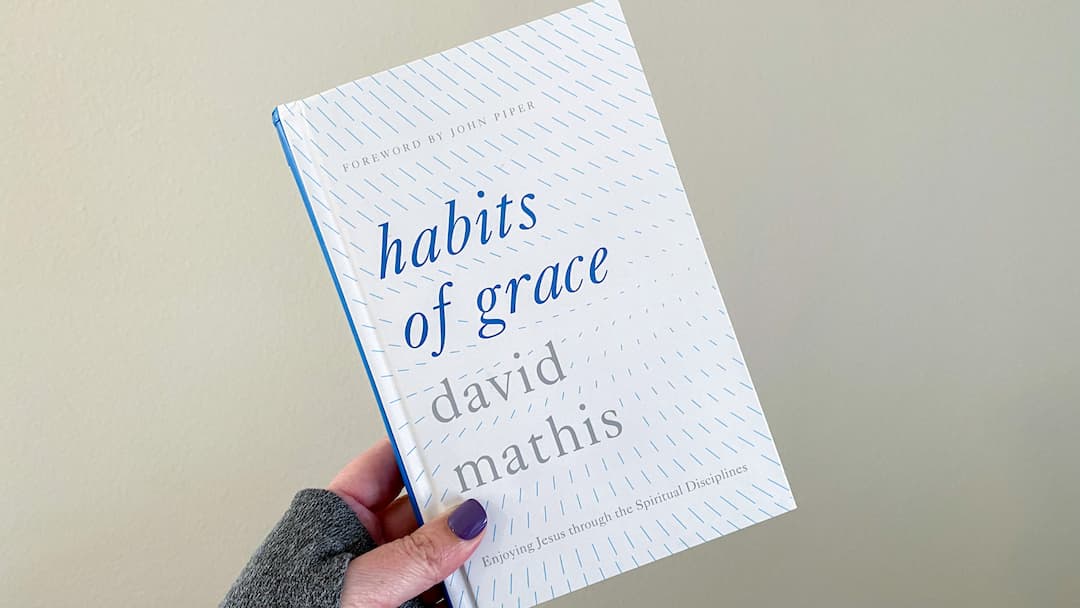
I purchased David Mathis’s book, Habits of Grace: Enjoying Jesus through the Spiritual Disciplines, when all of my business friends were reading personal development books about habits. While there is nothing wrong with the books they were recommending, I wanted a book that would help me create a spiritual routine rather than more systems for my business.
Mathis breaks the spiritual disciplines into 3 categories:
Hear His voice (Word)
Have His ear (prayer)
Belong to His body (fellowship)
Within these categories, he defines the disciplines and provides very practical suggestions for implementing them into your routine. He encourages you to spend time with God even if you can’t fit every discipline into your schedule. He also encourages you to make it about getting to know God, instead of seeking perfection or simply checking a box.
I will be implementing many of his suggestions. I am most deficient in the fellowship disciplines and will be looking for ways to do life with others better.