Each of the cases discussed, some of which were unfamiliar to me, have had serious ramification beyond the walls of the courtroom. Understanding how a Supreme Court ruling, and by extension a Supreme Court nominee, affects society as a whole was astonishing. I will be paying more attention to cases in the Supreme Court from here on out.
The book also followed Cruz’s legal and political career, creating a resumé of sorts, should he decide to run for president once again.
If you are a teacher or homeschool mom, this is a great book to use in a high school government class to supplement the curriculum.
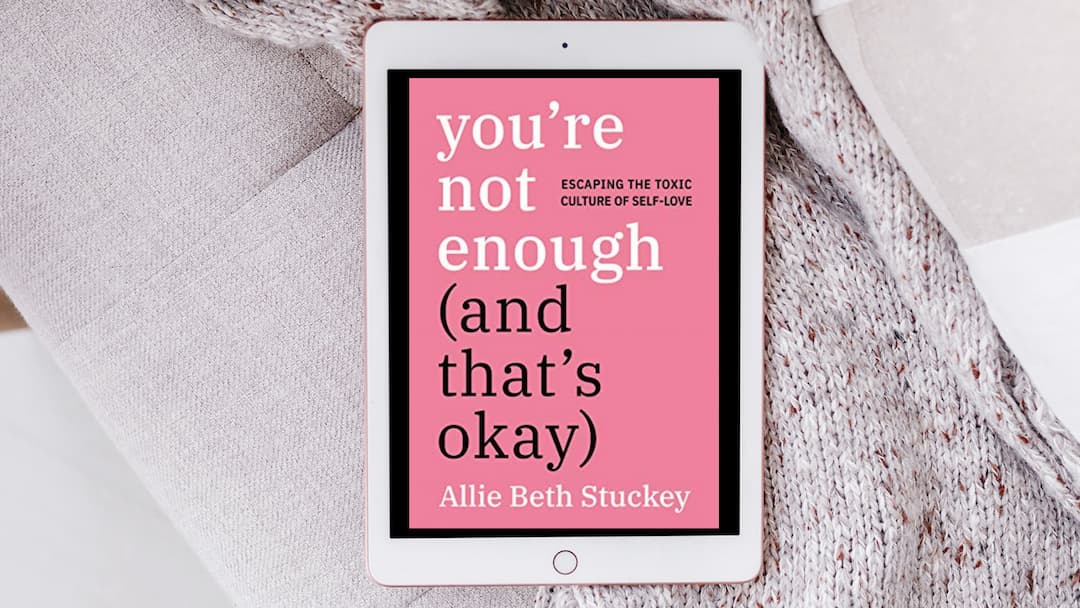
She uses her personal story to narrow the lies down to 5: 📌”You are enough.” 📌”You determine your truth.” 📌”You’re perfect the way you are.” 📌”You’re entitled to your dreams.” 📌”You can’t love others until you love yourself.”
Stuckey affirms at the very beginning that, “the self can’t be both the problem and the solution.” Throughout the book, she shows us that we can’t find the answer to our problem, insecurity, or unfulfillment in ourselves since we are the issue. Instead, we have to turn to God and His Word to provide the solution.
In a culture where women are being told they are no different than men, there is empowerment in sexual “freedom,” and they get to choose their own destiny, this book is a needed reminder that we are most content and fulfilled when we submit to God’s authority and live as He intended.
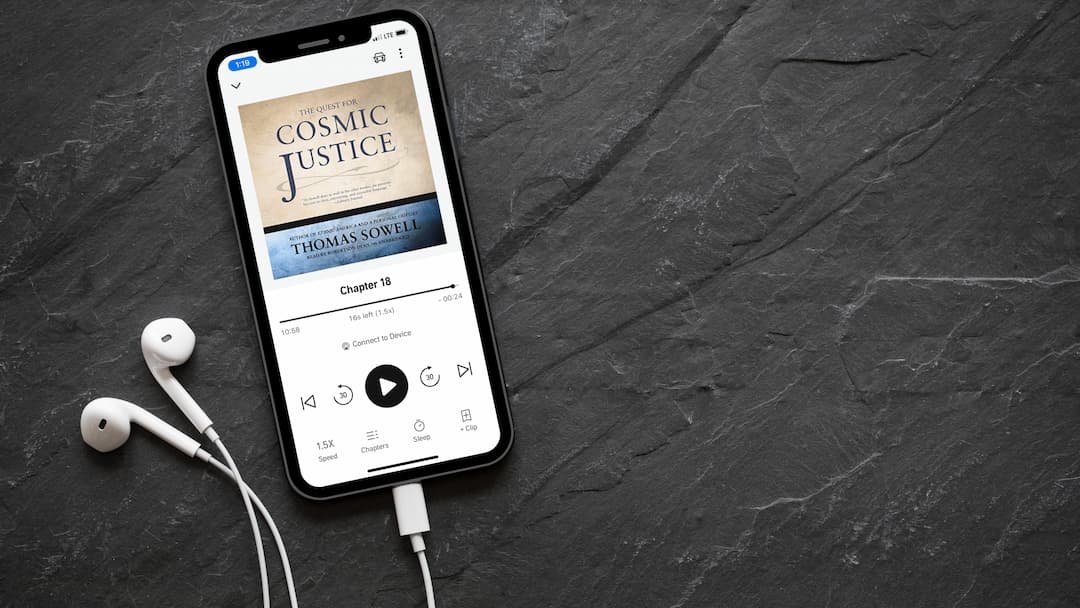
Thomas Sowell’s book, The Quest for Cosmic Justice, explains how, in an effort to accomplish equal outcomes, society actually makes things less equal by taking away opportunities and freedoms. The resulting policies end up being detrimental to a bigger portion of society than they benefit.
While I wouldn’t call this book an easy read, it is a necessary one. It is easy to look at one side of an issue and determine what we believe is the best course of action. But we should always count the cost—the cost to people, the cost to culture, and the cost to future generations.
Sowell uses extensive research, citing present and past policies and their ramifications, to prove his arguments. He demonstrates not only how the policies created for “the greater good” can be harmful, but also how they affect a society’s global standing. While his book is academic in nature (he is an economist, after all), it is not difficult to understand as he provides background information and explains the situations well.
If you are looking to make an informed decision about your position on the social justice movement among other ideologies, this is a great resource. Are you willing to count the cost?
Right at a year ago, I published a blog post about the enneagram. In it, I explained why I deleted a post from my social media, and I detailed some of my experience with the enneagram up to that point. I have spent the last year wrestling with the usefulness of the enneagram in the life of a believer.
Lest you think I have come to my conclusions lightly, let me fill you in on my background with the enneagram.
My Enneagram Story
I first heard of the enneagram while listening to a business podcast. I remember the moment because, since I was walking my neighborhood, I had to rewind the episode to hear the name again. I still couldn’t spell it until I looked it up on Google. After that, it seemed to come up every time I turned around. It was discussed in my network marketing team, my business memberships, all over my social media, and even in Christian circles.
I started doing research to see if the enneagram was biblical, and I found that many well-respected Christian leaders and teachers were including it in their personal lives and ministries. And as I started digging deeper, I became more and more interested. I started reading all of the books, and I took the tests several times.
I struggled to nail down my number until I was introduced to my enneagram mentor. She is a wonderful Christian lady who teaches the enneagram from a biblical perspective. She approaches the enneagram by listing an attribute of God for each of the numbers, and as His image bearers, we get to show off his attributes in our numbers. She also teaches it through the lens of the harmony triad—where your number creates a triangle with two other numbers, and your goal is to find a balance between those three numbers to live as God created you.
If you are familiar with the enneagram, you know this is not the traditional way of approaching it. This was something that drew me to her teaching. I wanted to see it through the lens of Scripture, and her method seemed to align with that goal. I went on to take courses, read more books, receive a certificate, and finally become an enneagram coach.
That’s right, a client could set up an appointment with me after taking the test, and I would walk her through her results so she could understand what her numbers said about her. I was invested! I saw the enneagram as a tool to help us conform to the image of Christ.
From my training, I created multiple graphics and put together a PowerPoint presentation to help others understand what I had come to know. I had months’, if not years’, worth of social media and blog content. I had plans to talk about different people in the Bible with their respective numbers, and use them as examples for us to follow.
The day finally came about a year into my journey to post my first graphic. It was a simple image of the wheel with the numbers listed along with their corresponding attributes of God. Shortly after posting the graphic, I had multiple comments and likes as well as invitations to speak on podcasts for Christian women. It was a hit!
Normally, I would have taken this as confirmation that I was on the right track… until I started reading the comments. All of them were positive, but they weren’t what I expected. Many of the comments cheered for a specific number or expressed amazement that they had never looked at the enneagram that way until reading my post. It was then that the conviction hit, and within hours of publishing it, I deleted the post and began rethinking all of the plans I had made. It was a very humbling experience, and I am embarrassed that it took me so long to submit to the conviction.
I realized that the enneagram would never lead my readers to Jesus. It didn’t matter how much my reader understood about herself because the answer is not found in her. I didn’t want to point her to a man-made tool; I wanted to point her to Scripture.
The Origins of the Enneagram
I remember when I was young asking my dad, “what if a bunch of men got together and made up Christianity and wrote the Bible just to see how many people would follow them?” I now firmly believe the Bible is God’s inspired, infallible, and inerrant Word, but this question is a reflection of how the enneagram came to be.
A couple of men—very intelligent men—pulled from information they had learned throughout their lives and put it together to create the enneagram. They claimed it was an ancient tool (they later revealed that this was false), and they began sharing it with others in their field.
To make matters worse, they practiced automatic writing in the creation of the enneagram. Automatic writing is a method that employs a psychic experience to unconsciously produce written word. When the writer comes to, he is surprised by what he wrote because it didn’t come from him. This is a demonic practice, and this is how the enneagram came to be. The authors channeled a spirit that wrote the information that formed the enneagram we know today.
The origins of the enneagram should give us pause.
At this point, it is normal to hear the argument that God can use worldly things to accomplish His purposes. I agree with that statement because God can redeem whatever He wants to redeem. We, however, cannot redeem anything. And why would God want to redeem the enneagram since He has given us everything we need for life and godliness in His Word? (2 Peter 1:3)
One of the reasons I enjoyed the enneagram so much was because I believed it helped me understand people better. If I knew their number, I was able to communicate with them in a way to which they would respond. I would be able to serve them in a way they would appreciate. I would be able to relate to them better as a friend. But the truth is the enneagram limits our scope rather than expanding it.
The Bible teaches us how to communicate, how to serve, and how to relate to others, but it doesn’t limit us to our number in order to do so. In Christ we have the freedom to serve how God wants us to serve, not merely how our number allows.
The Purpose of the Enneagram
I touched on this in my previous post, but I want to expound on it here. The enneagram is a tool for self-discovery. It is intended to help you understand yourself and why you do what you do. It is not intended to judge you if you do something wrong but simply to inform on why you do it. It encourages what is known as “navel gazing.”
Scripture tells us we are fallen, we have a sin nature, we are the problem. If we are busy looking at ourselves, we will not be looking at Jesus or at others. As Allie Beth Stuckey says in her book, You’re Not Enough and That’s Okay, “You can’t be both the problem and the solution.” Therefore, no amount of “navel gazing” will lead you to the solution.
This also leads to pride and a reluctance to repent of sin. More often than not, as I learned about a specific sinful behavior or personality trait, rather than repent, I would simply chalk it up to my number, “That’s just my one showing” (I actually said things like “pull back on your one and lean in to your seven” to my daughter! [she said while blushing]).
Another expression of pride I have often heard goes something like this, “The eight in me wants me to ….” In other words, our number becomes an excuse to do something we think we shouldn’t do. But can we really expect a tool that is intended for self-discovery to do anything other than create pride in our hearts?
The Answer to the Question
So the answer to the title of this post is “no.” Christians do not need to use the enneagram in their personal lives, in their ministries, or in their businesses.
While it is not my intention to judge you if you have found value in the enneagram—I’m obviously in no position to do that considering I led so many people down this path—it is my intention to give you food for thought. The Lord used that social media post to convict me, and He brought podcasts after blog posts after conversations to my attention in order to draw me closer to Him and help me realize I was wandering away from Him. Maybe He will use this blog post in your life in a similar way.
Voddie Baucham’s new book, Fault Lines: The Social Justice Movement and Evangelicalism’s Looming Catastrophe, is a great resource for those trying to get their footing in the ever-changing landscape of the culture. Baucham’s upbringing makes him the poster child for the social justice movement—he was raised by a single mom in gang territory in Los Angeles—yet he sees the flaws of the movement and works to educate others of its downfall.
Using the words from prominent social justice warriors, Baucham defines the terminology of the movement. Because these movements take place mostly in academic circles, he takes the time to explain their position in laymen’s terms. He takes pains to demonstrate the false information that is circulated in order to grow the movement. Then he uses Scripture to show the cracks in the arguments and the fallacies in the philosophy.
“The antiracist movement has many of the hallmarks of a cult, including staying close enough to the Bible to avoid immediate detection and hiding the fact that it has a new theology and a new glossary of terms that diverge ever-so-slightly from Christian orthodoxy. At least at first” (67).
In Fault Lines, Baucham calls out Christian leaders and teachers who have fallen prey to the cult of antiracism, but he does so with compassion and Christian love. He encourages believers who understand the errors of social justice to graciously correct brothers and sisters in Christ, and he reminds the reader that the war is a spiritual one.
If you’ve been feeling like the ground beneath your feet keeps shifting, this book will be a great resource to help you get your footing as you plant your feet firmly in God’s Word.