The month of September 2020 was interesting, to say the least. I started the month lying on the beach, but I ended the month lying in a hospital bed. As difficult as the month was thanks to my COVID diagnosis, I feel stronger and more empowered on the other side.
COVID Timeline
On September 17th, I came down with a fever, body aches, chills, and a shallow cough. As far as I know, I had not been around anyone who was infected. Over the next few days, I took ibuprofen and generic day and NyQuil. These medications took care of my symptoms. I had some great days and thought I was on the mend, but the fever persisted. Little by little, some more symptoms crept in. I lost my sense of smell and taste, and my appetite as a result. My cough sunk deeper into my chest. I started to notice that I couldn’t speak without coughing.
Eventually, I realized the over-the-counter medications were no longer reducing my symptoms and my cough got deeper and more productive. Finally, on Saturday, September 26th, 10 days after my symptoms began and after I coughed until I threw up, we decided it was time to seek medical attention.
I had decided from the beginning of the “pandemic” that I would not get tested for COVID-19 unless I needed medical attention. There were several reasons for this:
I didn’t see a point in getting tested only to be told I was positive and to go home and rest because there is no treatment.
I didn’t want my name on a government registry stating I had been tested (I’m not typically a conspiracy theorist, but this “pandemic” has brought it out in me a bit).
I didn’t want to do contact tracing that might force someone else to stay home and not be able to provide for their family (I had stayed home since my first symptoms to protect my friends and loved ones).
That Saturday morning, I had a video conference with a physician who essentially told me to go get tested. Mark took me to a walk-in clinic where they had me wait in my car for more than an hour. Once they saw me, they immediately put me on oxygen, and my symptoms almost completely dissipated. They tested me, took an x-ray of my lungs, and put me on an antibiotic.
By that afternoon, we knew I needed oxygen on a permanent basis, so Mark took me to the Emergency Room at one of our local hospitals. They immediately put me on oxygen and admitted me to the hospital. They also tested Mark, checked his oxygen, and took an x-ray of his lungs. He tested positive and was sent home to rest.
I was taken to a private room in the ER. After they got me into a hospital gown, I was taken for another x-ray and a CT scan. The CT scan showed no clots, but the x-ray showed pneumonia in my lungs. They returned me to my ER room, which would be my permanent home for the next 48 hours, and hooked me up to all the things. My oxygen cannula, my pulse-ox monitor, and my heart monitors were all attached to the wall and very much limited my mobility. I was also attached to an IV with fluids, and my blood pressure cuff was set to turn on every 15 minutes, making it very difficult to rest.
One element that made the experience a bit traumatic was that the nurses avoided me like the plague (pun totally intended). They did not come into my room very often, and I struggled to get anyone to come when I needed help. At one point, I had to pull off monitors and improvise because, after pleading for over an hour for someone to come help me use the restroom, I finally had to take matters into my own hands. Although that was a troubling moment, it gave me the push I needed to take responsibility for what needed to be done. It was at that point I decided I would ask questions and make my expectations known. And my situation seemed to improve with each new nurse that came on shift.
Another aspect that was intimidating was the donning and doffing of COVID attire. Before a nurse entered my room, he or she had to “suit up:” Double masks, face shield, eye protection, gloves, hair nets, booties, and a yellow, plastic gown. It was literally one step down from a hazmat suit. Once they entered the room, they couldn’t leave without tearing it all off and throwing it in the trash.
My first nurse ended her shift as soon as I was hooked up to everything. I then spent the night staring out my open curtains, watching the next nurse flirt with one of the male nurses for her entire shift. The third nurse was a young man who was able to find me a pillow and a bedside commode. The next nurse brought me a real bed so I no longer had to lay in the ER cot, and he changed the settings on my blood pressure cuff so it went off every 30 minutes. And the final nurse in the ER took great care of me and eventually got me moved up to the COVID unit.
While I was in the ER, they brought me my three meals each day, and I ate what I got. I started getting my sense of taste back, and the meals tasted delicious to me!
Medications
They also started me on several medications:
Remdesivir was the first medication. It is experimental and not approved by the FDA. It is intended to shorten the length and minimize the severity of the illness, but it is impossible to know if it actually helps. I was supposed to get five doses of Remdesivir, but my liver enzymes took a turn, so they stopped the medication after two doses.
They also started me on Decadron (Dexamethasone). It is a corticosteroid that strengthened my lungs.
The most unpleasant of the medications was a blood thinner that was administered as a shot in my stomach. Not only did I feel the needle, but the medication burned as it entered my system, and I could feel it for a full 15 minutes. This medication was to be administered every 12 hours. Once I moved up to the COVID unit, I refused any more doses because I was told that as long as I was up and moving around, I wouldn’t be at risk for clots. In the ER, I didn’t have the option to move around.
There was never any mention of Hydroxychloroquine.
COVID Unit
The difference between the ER and the COVID unit was night and day! As soon as I reached the COVID unit, all of the monitors came off. My heart monitors were attached to a portable, battery-powered device that went in the pocket of my gown. The oxygen cannula was really long, giving me the freedom to get up and walk around my room. The pulse-ox and blood pressure cuff didn’t stay attached, and the nurse assistant came into my room every four hours to check my vitals. And the kitchen called me to get my meal orders so I could choose what I ate.
On Tuesday morning, my first morning in the COVID unit, I saw the sun for the first time since Saturday. I was also able to take a shower and feel human again. The doctor told me I needed two more doses of Decadron through my IV, and then she would send me home. They were able to take me from the 3.5 liters of oxygen down to 2 liters the first night, and by Wednesday morning, I was completely off of oxygen.
The nurses in the COVID unit didn’t avoid me, but they did leave me alone for long periods of time, making it easy for me to relax and have phone conversations with friends and family. When they did come into my room, they took a vested interest in my progress, answered my questions, and discussed the presidential debate.
Wednesday morning, the doctor surprised me by telling me she was going to discharge me with a prescription for the steroid and a prescription for a blood thinner. By 5 p.m. on Wednesday night, I was back at home with my family.
Health Advocate
One of the scariest elements of this experience was that I had no point of reference. I had not known anyone who had gone to the hospital with symptoms. I only knew what the media was feeding me about the illness, the medications, the recovery, and the mortality rates. Knowledge is power in this case, so the more we talk about our experiences, the more we empower others to be their own advocates.
What I have learned is that no two medical professionals are going to give me the same answer. Everyone is making the best decisions they can with the information they have, but that information has gaps. When I asked why I needed to take a blood thinner that had so many contraindications it was scary (including suicidal thoughts), the only answer I was given was that it is recommended by the CDC. It felt very much like they were throwing everything at it in hopes that something sticks.
Hopefully, you will never experience what I have. But if you do, my prayer is that my experience will give you the confidence to take care of yourself and advocate for your health. As I continue my recovery, I will post updates. I am happy to answer any questions you may have, so feel free to reach out!
I don’t know about you, but for me, it is so easy to justify the “almost right” in my life!
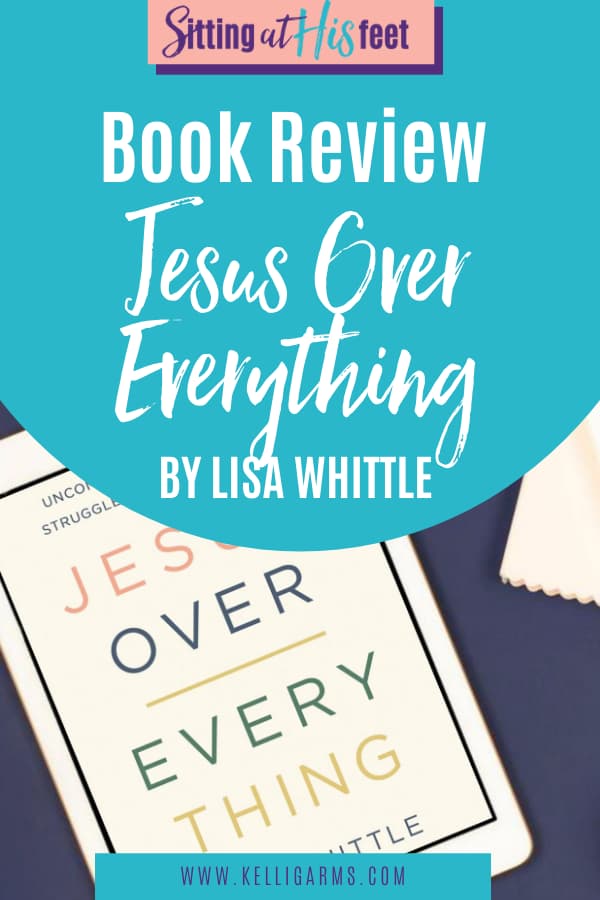
The truth is it isn’t that hard to choose between something good and something bad. It can, however, be difficult to choose between something good and something better. Because the “better” choice doesn’t always mean easier, more pleasant, more lucrative, or more fun, it doesn’t always seem to be better. But Lisa reminds us that the better choice is always Jesus, even when choosing Jesus brings humility, unpleasant consequences, or loss of relationships because choosing Jesus leads to peace, holiness, and wisdom.
Lisa stepped on my toes again and again, and I realized how deeply the message had penetrated when I encountered a “Jesus over Everything” choice recently:
One of the effects of the COVID lockdown, mask mandates, and cultural unrest has been a strain on my marriage. And one weekend, I had enough. Mark and I weren’t talking except to accomplish the daily routines. We weren’t saying goodbye as he left for work, acknowledging when the other walked in the room, or saying good night at the end of the day.
When Sunday dawned, I had already decided I wasn’t going to church. I didn’t want to sit in the pew next to him and pretend that everything was fine. After all, authenticity is the name of the game these days. As I got ready for the day, fully intending to put on my yoga pants and announce to my family that I would be watching the service online, I felt the nudge.
You know the nudge, right? The one that brings questions to mind where you have to justify your decisions? The one that you try to reason away?
Why do you go to church in the first place, Kelli?
What are you teaching your kids if you don’t go to church today?
What are you teaching them if you do go?
And trust me, I had all of the justifications ready! After all, I grew up in the church. There’s no place in Scripture where it says I have to go to church every time the doors are open. It’s legalistic to think that I have to go to every single service!
But that’s the beauty of a “Jesus over Everything” choice. It’s not about your justifications of the “good” thing; it’s about submitting to the “best” thing.
That’s when the Holy Spirit asked, “Who is taking first place in your reasoning?”
Ouch! There it was, the question that brought clarity. I wanted Mark to sit in that pew alone that day. I wanted to teach him a lesson and stay home sulking at the same time. I wanted to manipulate him into fighting it out with me. This wasn’t about legalism or even self-preservation. It was pride and selfishness.
Well, I went to church. I sat in the pew and watched Mark sit transfixed by the message. I didn’t pretend everything was fine, but I did feel my heart softening as I heard the Word preached. And by the time we left the church building that day, Mark and I were talking again.
What if I had settled for “almost right” instead of pursuing the “Jesus over Everything” choice? Only God knows what the outcome would have been, and I can honestly say I’m glad I don’t know.
Sister, I encourage you to read Lisa’s book. No matter where you are in your walk with the Lord, you will find applicable truth that will help you distinguish the “right” from the “almost right” in your life, too. And there is no telling what God will do with your life once you’ve chosen Jesus over everything!
If you want to learn more about how to study the Bible on your own, download my FREE workbook below.
Sometimes I fail to see the connection between theological principles and my everyday life. For example, I’ve learned about many of God’s attributes in my Bible study, but I haven’t always understood what they have to do with me. I want to explore one of those attributes with you and help you make some practical implications.
I’m sure God has attributes that we don’t even know about; after all, one of His attributes is that He is infinite, so He probably has an endless number of attributes. But the ones we know about can be divided into two categories: communicable attributes and incommunicable attributes.
His communicable attributes are the ones He shares with us. They are easier for us to understand because we have a shadow of them in us as image-bearers of God—things like love, mercy, justice. Those attributes may not look the same in us, but we can grasp them a little easier than His incommunicable attributes.
God’s incommunicable attributes are those that only He has. These are harder for us to understand because we can’t relate. They include attributes like omniscient, eternal, infinite, and omnipresent. I want to unpack God’s omnipresence a little bit because, if we can catch a glimpse of what it means, it could transform our Bible study, our perception of ourselves, and even our worldview!
“Omnipresent” means “All present.” In other words, God is everywhere. I don’t know about you, but there are times in my life that would be simpler if I could be in two places at once! Just keeping my family on schedule with our activities would be easier.
When we think of someone being in two places at once, we might think of an out-of-body experience where our spirit is detached from our body. This isn’t how God is omnipresent. There isn’t a central location, or hub, from which He sends out projections of Himself to different corners of the world. He is actually present everywhere all of the time.
A simple definition of God’s omnipresence is “God is fully present in all places at all times.” Let’s break down this definition one phrase at a time.
“Fully present”
We may not be capable of being in two places at once, but we claim to be able to accomplish two or more tasks at the same time. We call it multitasking. But the truth is multitasking is a myth for humans. We can only successfully multitask if only one of the tasks requires our full attention. For example, I can apply my makeup while I listen to a podcast. Applying my makeup is a habit that doesn’t require much thought, so I can focus on the podcast. That is, until I drop my blush container. Then suddenly I’ve tuned out of the podcast and am focused solely on recovering the container and mourning the shattered pieces on my bathroom floor. We are incapable of focusing on more than one thing at a time.
But God is not like us. He is fully present everywhere. That means that you have His undivided attention all of the time. It doesn’t matter if you are reading your Bible, taking care of your kids, working at your job, sleeping, or even doing something you shouldn’t, God is giving you His full attention. You always have God’s undivided attention. He is a personal God.
“In all places”
At the same time that you have God’s undivided attention, so does everyone else. While you have his undivided attention, so does the missionary in Africa, the pastor in South America, and the teacher in China. And His attention to them doesn’t take away from His attention to you. He is fully present in all places.
Ok, now buckle up because we’re going deeper!
“At all times”
The definition doesn’t say that God is fully present in all places at the same time, though that would certainly be true. It says, “at all times,” meaning in every time. So, yes, He is fully present with everybody at the same time, but He is also fully present with everyone across time!
To God, the past is not the past and the future is not the future. At the same time that He is sitting here with me writing this blog post, He is sitting with you reading this blog post, even though those events are happening at different times for us. At the same time you have his undivided attention right now, so does your grandpa 50 years ago and your kid 50 years from now.
I know, mind blown!
But why does this matter? What difference does it make for you in your life today? There are many implications when it comes to conversations about predestination, biblical justice, and His perfect timing, among others. But I want to focus on what it means for your time in the Word.
When God is sitting with you while you read His Word, He is also sitting with the man who penned the words, taking care to craft the words in such a way that they are written for you for this moment. Take a minute and think about that. I’ll wait.
Because God wrote the Bible from the vantage point of seeing everything and every time all at once, He crafted the words in such a way that they are relevant to every generation in every culture.
The next time you sit down to read your Bible, take a moment to realize that while God is there with you, He is inspiring the author of the text at the same time. I can personally attest that it will change your time in His Word!
If you want to learn to study the Bible on your own without having to depend on someone else to tell you what it means, download my FREE workbook: Learn to Study the Bible.
This year, I set out to learn more about prayer. Prayer has always been elusive for me for a couple of reasons. 1) If God already knows what is going to happen, what is the point of praying? and 2) If I pray for things to change, am I not trusting His sovereignty? But there is no question that all throughout Scripture we are commanded to pray. So there was definitely a disconnect for me.
I have had so much help from others in my pursuit of understanding prayer and making it a daily practice, and I want to share some of those resources with you. This list of prayer resources is not exhaustive by any means, but it has been my starting point for a life-long journey.
**Some of the links to follow are affiliate links, so I make a commission on your purchase. However, I will never recommend something I don’t whole-heartedly love and use.
Prayer Course
I took a prayer course as I began my research. Valerie Woerner does a fantastic job of explaining prayer and giving very practical tips and examples.
Developing a Fluency in Prayer
Prayer Journal
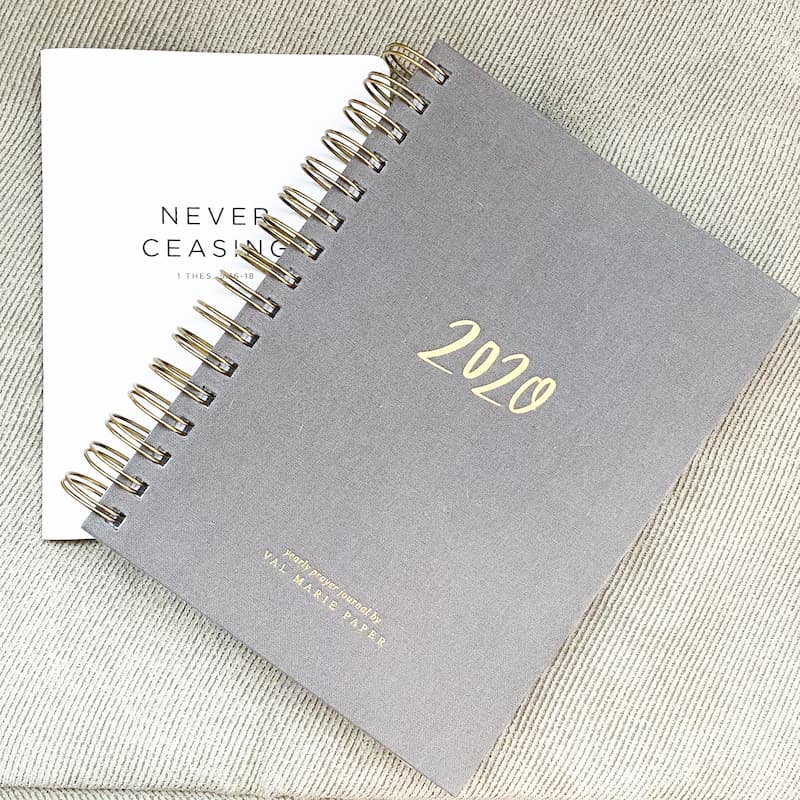
Val Woerner also created this prayer journal. I loved it so much that I got smaller, undated versions as Christmas gifts for the men in my life.
Praying Scripture
One thing I have learned in my journey is that Scripture makes for powerful prayers! Here are my favorite resources for praying Scripture back to God.
Sharon Jaynes’s book Praying for Your Husband from Head to Toe has transformed my marriage! She taught me to pray for things I didn’t even realize needed prayer.
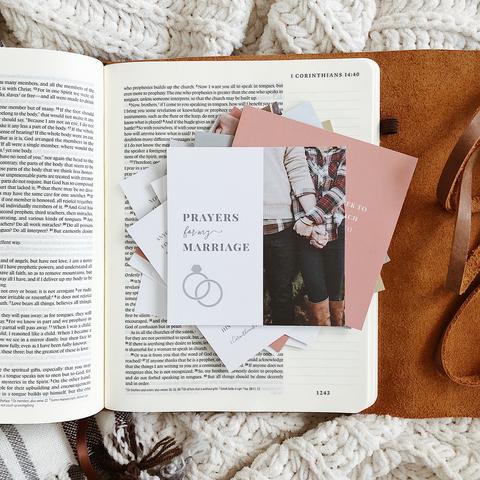
And the prayer cards from Daily Grace Co have also helped me learn to pray Scripture over my husband and my marriage. They are also beautiful and can be placed all throughout the house as reminders to pray for him throughout the day. (Read the full book review here.)
Daily Grace Co. also has cards to help you pray Scripture over your children, your anxiety, your pregnancy, and more.
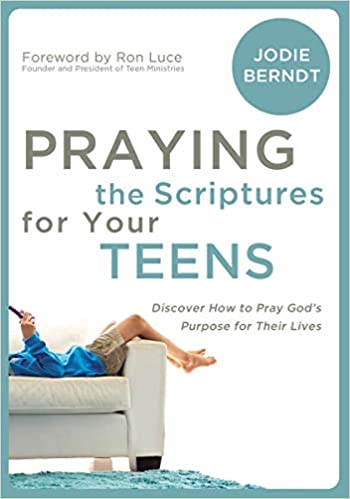
Another resource I have come to love is Jodie Berndt’s book Praying the Scriptures for Your Teens. She gives very practical advice and tips for how to pray for issues your teen is facing and will face in the future. If your children are younger or are adults, she has books to learn to pray for them, as well. It’s never too early or too late to pray for our children and the impact they will have on this world for the cause of Christ!
Write the Word Journal
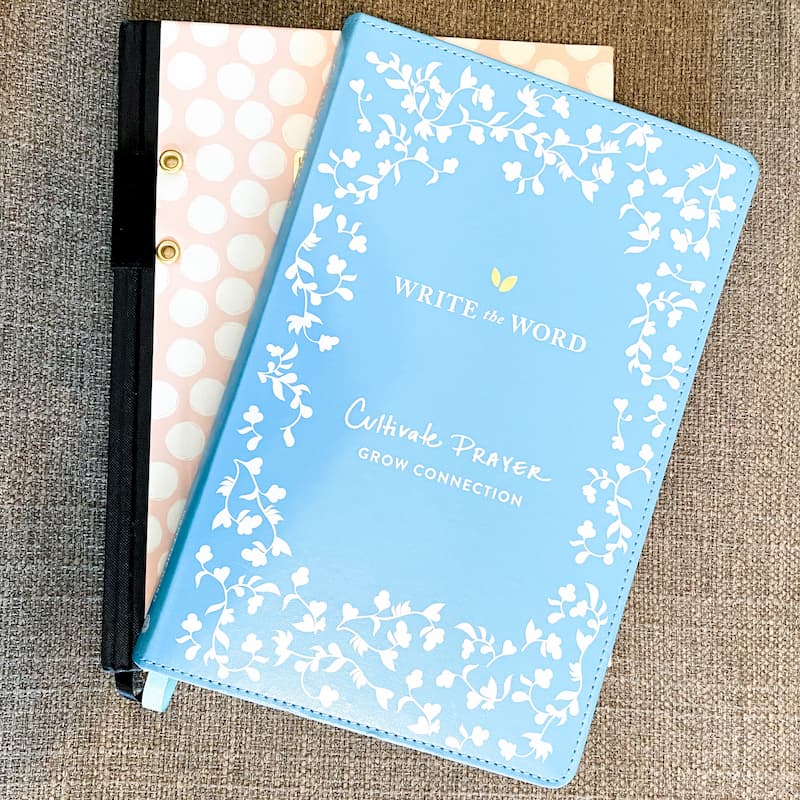
Finally, I have also truly enjoyed using my Write the Word Journal from Cultivate What Matters. This journal has been specific to cultivating prayer, but there are Write the Word journals for a variety of topics to cultivate in your life including joy, hope, worship, and a blank one you can tailor yourself.
I pray you find these resources helpful. If you have a resource you would like to recommend to me for my prayer journey, I would love to hear all about it!
If you are wanting to learn to study the Bible for yourself, I would love to share my free workbook with you, 6 Steps to Study the Bible on Your Own. It will guide you through the steps from reading the passage to learning it well enough to teach it to someone else. Download it here:
I recently watched a debate on Instagram Live that boiled down to discussing the authority of the Bible and the divinity of Jesus. I’m not sure what made me stop and watch, but I’m glad I did.
One of the participants, let’s call her Jane, made an interesting statement. While discussing the inspiration and inerrancy (no errors) of Scripture, Jane said she loves the Bible, but her god is “bigger than a book.”
This was reminiscent to me of a statement in William P. Young’s book The Shack. One of the characters in his book says, “Nobody wanted God in a box, just in a book. Especially an expensive one bound in leather with gilt edges, or was that guilt edges?” (For a full review of the book The Shack, click here.)
On the surface, these statements sound good. Who wants to worship a god who is limited to a book? But that’s just it—He’s not limited by a book; He makes the book limitless!
Who put God in a book?
First, it’s important that we make something very clear: Man did not put God in a book. God chose the written word as the medium by which we get to know Him. He chose the men who penned His Word. And He chose the very words that were written. He did all of this with us in mind. As our Creator, He knows how best to communicate with us.
As a result, the Bible isn’t an ordinary book. The Bible was written by some 40+ men over a period of 1,600 years, and yet has a common thread woven through its entirety. Its pages contain God’s beautiful love story as He pursues us and gives us the means to participate in a relationship with Him.
This is what the author of Hebrews says about the Bible:
“For the word of God is living and active, sharper than any two-edged sword, piercing to the division of soul and of spirit, of joints and of marrow, and discerning the thoughts and intentions of the heart.”
Hebrews 4:12 ESV
No other book does what the Bible does. And anyone who spends time in the Word can tell you it is life-giving and life-changing.
Why is the Bible different?
What makes the Bible different from other books is the fact that it is inspired by God. It was literally breathed out by God to the men who wrote it down. However, Jane argued that the inspiration the writers of the Bible received was no different than the inspiration an artist feels before he creates a work of art.
While it is true that our only measure of beauty comes from God and, therefore, beauty in art has a shadow of inspiration, it is not the same inspiration of Scripture. Artistic inspiration is not equal to divine inspiration. Art doesn’t speak to everyone. Different types of beauty appeal to different people. But the word of Scripture is universal.
If this is a struggle you have been facing, I urge you to spend time in the Word. Many have set out to disprove Scripture only to be changed by it and embrace it once they really studied it. If you need some direction for Bible study, I invite you to download my free workbook, 6 Steps to Study the Bible on Your Own.
[activecampaign form=13]
If you want to know more about how it was determined if a book was inspired and, therefore, it was included in the canon of scripture, I recommend you listen to the second season of Phylicia Masonheimer’s podcast Verity. Click here to check it out. (And when you’re done with season 2, go back and listen to season 1 because it is fire, too!)