When I was a mom of littles, I knew I needed help, but it was so hard to sift through all of the conflicting advice, and let’s be honest, I thought I could figure it out on my own. As my kids have grown, I’ve come to realize that parenting is a guessing game. We pray about it, and we try things, and we hope something sticks.
In light of Titus 2, I want to share some of the things we did when our kids were younger. I don’t pretend to have it all figured out, but maybe one of these tips will resonate with you.
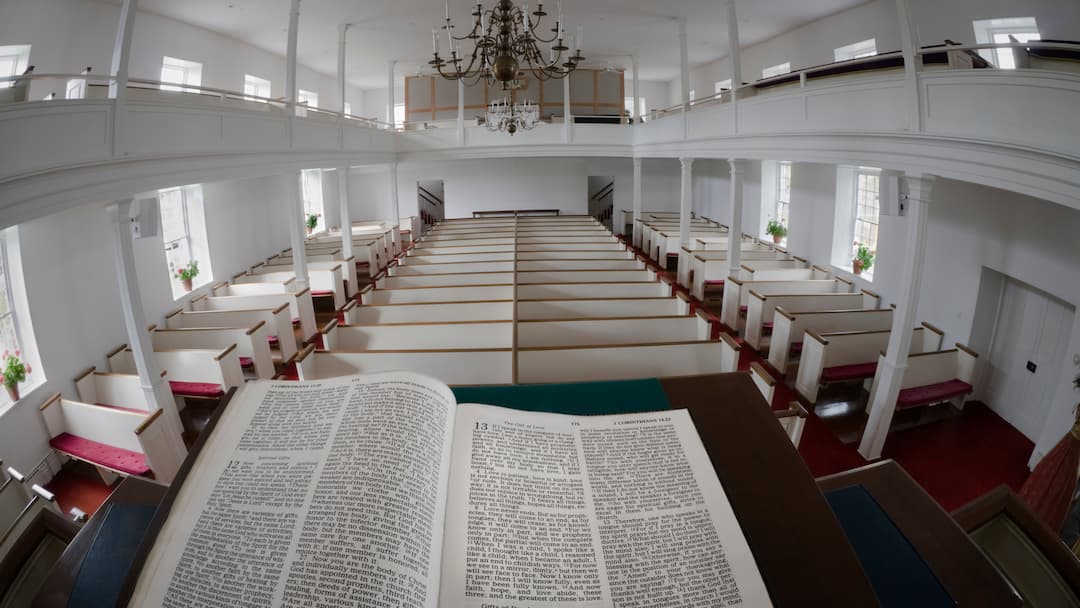
We were blessed to spend the last decade at a church where our kids sat in the auditorium for Sunday morning service from Kindergarten up. They went to Sunday school before service, so they were able to socialize and get their wiggles out. Scripture tells us to train up our kids, so this was a great way to live out that command, training them to sit still and listen.
Our current church keeps the kids in the sanctuary through the music portion of the worship service before they head to children’s church. Even that is enough time to begin the training process. Take every opportunity to train them to respect God’s house. What does “respecting God’s house” look like to you? How can you communicate it to them?
Tip #1: Keep your kids with you
It is your job to train your kids when you are present, so they should be sitting and worshipping with you by their side. Don’t inadvertently place this responsibility on another parent by allowing your kiddo to sit with his friends. This is a great time to teach your kids that church is not a social club. There is a purpose: to worship God and learn more about Him.
Tip #2: Give your child something simple to do
This is going to depend not only on the age of your child, but also her learning style. If your kiddo is a writer, ask her to listen for something specific to write down, for example, the Scripture references the pastor mentions during the sermon. If your child is an artist, let her draw something inspired by the message. If she is a reader, show her the passage in a Bible and let her read it quietly during the sermon. The goal is to help her listen to the sermon, so using a coloring book or playing with a tablet will be a hindrance. It will not only distract her, but may also distract those around her. Whatever you give her to do, ask her questions after church, and give her a chance to show off what she learned.
Tip #3: Practice at home
Plan activities at home during the week which require your child to sit still and listen. Read to him, tell him stories, do a family devotional time, etc., anything that does not involve a screen. Remember, this is not about entertainment but about extending the attention span and listening to learn. Make this a regular activity at home where you can explain and enforce your expectations. This one practice will make church time go much more smoothly.
Tip #4: Be consistent
Remember that this is training, and training takes time. You don’t lace up your tennis shoes for the first time the day of the race; you spend weeks, even months, training to run that race. The same is true for training your child. If you will be consistent, even when she fights you, it will be short lived. Just remember on those especially hard days that this training is for your child’s benefit. You are not doing this to be mean, but to grow and mature her.
Let me add that a wiggly child or a crying baby causes more stress for the frazzled momma than for anyone else in the room. What we as moms think is loud and disruptive often goes unnoticed by the rest of the congregation. Training your child to behave is not for you or for the congregation. It is for your child.
Our culture lives for entertainment, but the pursuit of godliness requires discipline, effort, and delayed gratification. Don’t believe the lie that kids don’t have the attention span or will think church is boring. Give them the tools they need to develop these necessary skills. They will be better for it.
Updated. This Bible study post was originally published on May 6, 2020.
What tools do you really need to study the Bible? Honestly, you really only need a Bible and the Holy Spirit. If you don’t have a Bible, you can’t study it, and if you don’t have the Holy Spirit, you won’t understand it.
But beyond that, there are a few essentials you need if you want to really dive into the passage. As we move through this series, I will add the tools you need for each step. I know you want to know them all now, but you may decide to only work through step 3, so you won’t need the tools for step 4.To begin, though, let’s talk about the basics.
Which Bible Translation Should You Use?
This is a very personal decision. Bible translations are not the same as Bible paraphrases. There is a continuum of Bibles ranging from word-for-word translations to thought-for-thought paraphrases. It isn’t an issue of which is better, but it is an issue of understanding what you are using.
A word-for-word translation attempts to get as close as possible to the original language. A thought-for-thought paraphrase interprets the original language and writes it in a way that might be more familiar to you. It is up to you to decide if you want a Bible that might require a little more work to understand versus one in which someone else tells you what the passage means.
Which Bible Type Should You Use?
Should you get a study Bible? Should you get a journaling Bible? Should you get a large-print Bible? It depends on the outcome you want and what works best for you.
Study Bibles have great notes and cross-references. They tend to be bigger and heavier, and they can also be a bit more expensive. Unless you like hardcopy Bibles, you might prefer to access a lot of the notes online.
If your goal is to write in your Bible and take extensive notes, you should choose a Bible that has wide margins or a lot of white space on the page. And if you are a little nervous about writing in your Bible, getting a journaling Bible specifically for this exercise might be just the ticket you need to give yourself permission to mark up the pages.
Since I know you will ask, I have an ESV Study Bible I use for the notes and the cross-references. I have an ESV Single Column Journaling Bible I purchased when I started this study method. I also reference several other Bibles including the Study Bible for Women HCSB version, the CSB She Reads Truth Bible, the KJV Scoffield Bible, and the Reina Valera Spanish translation (yes, I have accumulated quite the collection of Bibles over the past 40 years).
Should You Get a Fancy Journal?
No, don’t go buy a fancy notebook. One of the biggest roadblocks to diligent Bible study is being afraid to ruin a beautiful notebook with your scribblings. And you will scribble. The goal isn’t to write the next great Bible commentary, but to have a place to jot down your thoughts, prayers, reactions, and research. Start with a notebook in which you are not afraid to write.
Make sure you choose a paper notebook and not an app on your phone or a document on your computer. There is something that happens in the brain when you physically connect pen to paper. As you watch your hand write the words, they become part of you. Since the end result you desire is to grow closer to God by studying His Word, it makes sense that you make the words part of yourself.
Which Pen Is Best?
Do not put too much importance on the pen. I have used a cheap Bic pen, Sharpie pens, PaperMate Ink Joy pens, erasable pens, and they all have their pros and cons. For this first step, while you’re still taking notes, the pen doesn’t matter. When you get to step 6 where you will write in your Bible, we will revisit this question.
This series is designed so you can stop the overwhelm of Bible study. You can end the study of a passage at any step in this process. Always start with step 1, but go only as far as you want to go. If you would rather download the process in a FREE workbook, you can enter your information below, and it will be delivered directly to your email.
If you’ve kept up with my posts, you know that I recently read Eric Metaxas’s biography of Dietrich Bonhoeffer, and I couldn’t help but see the similarities to Bondarenko’s account. As Christians in a quickly shifting culture, it behooves us to read these books and prepare ourselves to stand for our faith in the face of true persecution.
Bondarenko grew up under the shadow of prejudice against his family’s faith. He was prepared to answer the questions, face the interrogations, and go underground when necessary. Every time the prison guards nearly broke him, God gave him strength whether it was through an interaction with another inmate, a communication from a loved one, or even a vision in the privacy of his solitary cell.
In the midst of his suffering, we get the privilege of witnessing a love story as Bondarenko met and married Maria. As his family grew, the danger did not diminish, and Maria was forced to raise their children alone for many years as Bondarenko evaded the authorities and was was ultimately captured for a third prison term. One of the most moving scenes in the book is when his family visited him in prison.
In the aftermath of the Soviet Union’s collapse, Bondarenko has returned to the prison and the KGB office where he faced down the enemy. He has used his experience to encourage others to stand for their faith. I imagine one day he will hear those precious words, “Well done, my good and faithful servant.”
Updated. This Bible study post was originally published on May 1, 2020.
Are you tired of being told what the Bible means rather than being able to study it for yourself? Have you ever done a Bible study and felt like you were learning so much, but when the study ended, so did your growth? Do you feel like you can’t have spiritual conversations because you just don’t know enough? Are you afraid to witness because someone might ask you a question you can’t answer?
There are few things in this world more frustrating than the feeling of inadequacy when you think you should be confident. I grew up in a missionary’s home, attending church from the very first Sunday I had breath. I could answer all of the Sunday school questions, and I knew all of the Bible stories. I graduated from Bible college AND seminary. In spite of all of that, I felt unqualified to have spiritual conversations, and I didn’t know how to apply what I knew to real-life situations.
The truth is that growing up in a preacher’s home created some challenges for my personal walk because it was always easier to ask my dad than to search Scripture for myself. And this was my pattern even through adulthood. It wasn’t until my dad started showing symptoms of Alzheimer’s that I realized I needed to bulk up my own spiritual muscles. But where to start?
Pursuing Godliness through Bible Study
I like to compare the pursuit of godliness to a health journey. We know the only way to get healthy is through diet and exercise. In the same way, we know the only way to get healthy spiritually is through personal Bible study and prayer time.
If you’re like me, you have a cabinet full of shakes, pink drinks, supplements, and wraps to help the weight loss process along, but if you look at the fine print, they will all say “works best when paired with proper diet and exercise.” In much the same way, we buy books about the Bible, listen to sermons, subscribe to podcasts, and do big-name Bible studies to help our spiritual walk. All of these things are good, but they all work best when paired with personal Bible study and prayer.
Without personal Bible study, how do you know the book you are reading or the sermon you are listening to is teaching truth? We have to put in the effort to cut out the middle man. We have to learn to study Scripture and pull out the principles on our own.
“God looks down from heaven on the children of man to see if there are any who understand, who seek after God” (Psalm 14:2 & 53:2)
Stop depending on others to tell you what the Bible means and learn to study it for yourself.
God wants you to look for Him.
God wants you to seek Him.
God wants you to find Him.
“You will seek me and find me, when you seek me with all your heart” (Jeremiah 29:13)
Here’s the good news: Godliness is learned! It isn’t reserved for an elite few. Godliness is available to all of us.
“His divine power has granted to us all things that pertain to life and godliness, through the knowledge of him who called us to his own glory and excellence” (2 Peter 1:3)
The way we grow in godliness is by growing in our knowledge of Him. And you have all you need to do that in the pages of your Bible. Ok, so what’s the first step?
There are many plans out there that you can try, but if you don’t want to look any further, you can find your guide here. I took the Bible study tools that worked and created a Bible study process. I have created a blog series that spells out the unique process that always begins at step 1 but only goes as far as your current season of life allows. If you would rather download the process in a FREE workbook, you can enter your information below, and it will be delivered directly to your email.
Greci takes what can be a complicated topic, the attributes of God, and puts it into language that is easy to understand, giving relatable and vulnerable examples from her own life and experience. While she doesn’t sugarcoat the topics in each chapter, she provides hope for each difficult discussion. The attributes of God discussed in the book include His love, righteousness, faithfulness, and holiness, to name a few.
My favorite chapter is the second one. In it, Greci points out something I try to communicate every chance I get: “This life here on earth is just the beginning, yet we tend to live like it is the be-all, end-all.” When we keep our eyes on eternity rather than on this temporal world, it changes the things we think, say, and do. It allows us to understand what true love is as we interact with this confused world.
While Greci quotes a few people who have demonstrated a lack of true biblical wisdom, the quotes she uses in no way undermine the truth of the message she presents.
This book is an introduction to the attributes of God and a good springboard for deeper study. It is great for someone who is trying to find her footing, not sure where she stands with God or how a relationship with Him should affect her. But if you are a seasoned Christian and have a strong relationship with the Lord, this book could serve as a reminder of the first things, getting back to the basics, as they say.