by Kelli Garms | Jun 6, 2022 | Book Review
In a society that seems to be disintegrating before our eyes, Lutzer helps us identify the root causes and gives us tips for combating it from a Christian worldview.
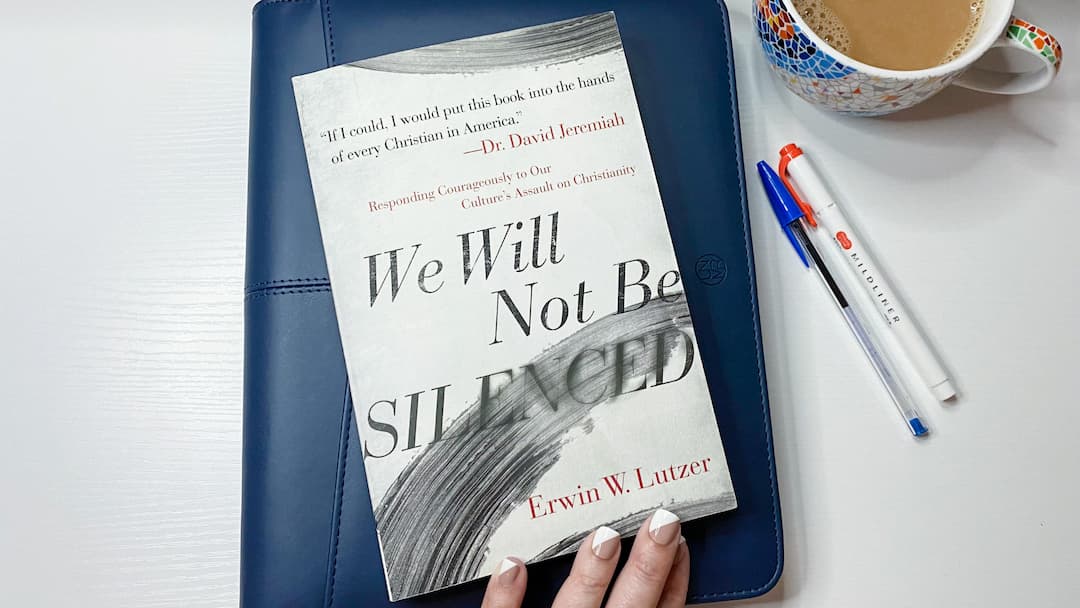
Erwin Lutzer’s book, We Will Not Be Silenced: Responding Courageously to Our Culture’s Assault on Christianity, is one of the best explanations of the current situation in America and the direction our country is going that I have read. It is an encouragement to course correct as soon as possible, and it gives specific ways Christians can and should stand against the tide of the culture.
While I struggled through some sections where he and I have a different perspective (I address these at the end of the post), Lutzer made connections I haven’t found in other materials I’ve read on this subject.
Lutzer gives a thorough and clear history of cultural Marxism and how it is gaining ground in the United States. Beginning with the destruction of the nuclear family, Marxism really took root in feminism, encouraging mothers to work outside of the home and allowing others (namely the public education system) to raise their children. The key to Marxism is oppression. Once someone is convinced she is a victim, she is easier to motivate into revolution.
He makes this connection even further when he addresses the link between broken families or single parents and Marxism. He says, “Children without family roots can be more easily directed toward secular values and state benefits. The state can do for them what their parents failed to do” (27).
This victimhood formed the basis for the flourishing of feminism, abortion, the sexual revolution, homosexuality, and transgenderism. These movements have not happened organically but have been planned and executed by those who seek to destroy America as we have known it.
Lutzer dives into the reasons behind the rewriting of American history. He says, “…when revolutionaries want to remake a country, they vilify the past to give legitimacy to their vision of the future” (42). In order to make those in the next generation buy into the “necessary” changes, the Marxist must convince them our country is founded on terrible principles and must be destroyed and rebuilt. There can be nothing positive in our history in order for this revolution to take root.
“Absurdity is no longer an argument against a point of view. If you are progressive, you have to detach from reality and self-righteously embrace the bizarre. This is the world of alternate facts, and the price one has to pay to see evil as good and good as evil.”
Quote by Erwin W. Lutzer
Other connections Lutzer makes include the link between Marxism and fighting climate change as well as opening the American border and defunding the police. But Marxism is never about the issue it claims; it is always about power.
We have redefined words and created new terms to ensure that the conflict between races, classes, and genders will never be resolved. We must remember that, “In CRT [Critical Race Theory a.k.a. social justice],…the goal is not to foster unity or common ground but to assign blame and ensure that people will be put into categories so that tensions between the groups can be enflamed and maintained” (80). Ultimately, “No common ground is allowed because that would diminish the extent to which some groups have been oppressed. And no concessions are ever enough” (81). Lutzer reminds us that, “Only through the cross can we show [the world] what reconciliation looks like” (100).
Throughout the book, Lutzer upholds the biblical definition of man (and woman) as one made in the image of God, as well as the biblical instruction on gender, marriage, family, and the church. He reminds us that we must remain faithful in the face of the blatant lies of the culture. He is especially concerned with the sexualization of children: “Perhaps nowhere do we see the work of Satan in America as clearly as we do in the sexualization of children—destroying their identity, confusing their gender, and creating unresolved guilt and self-hatred” (156).
Lutzer also dives into the world of economics, explaining why capitalism, while flawed, is rooted in principles that align with Scripture. He takes on the proponents of socialism by explaining how it will always inevitably fail.
One connection Lutzer makes that had not been presented to me before is the mind-blowing alignment of the social justice movement with Islam. This is mind-blowing because there is no more “intolerant” religion than Islam, yet we find the very things it condemns have aligned with it. Why? Because the enemy of my enemy is my friend. Islam calls for the destruction of America. Since there is a shared goal, they can work together to that end. However, the partnership cannot last. But when the dust settles, which one will stand victorious?
While I love this book and think every Christian should read it, I did have a few moments of disagreement with the author. Lutzer seems to lean a little heavily in support of the idea of systemic racism in America. He says that “we are not yet where we want to be in race relations; the failures of the past must be acknowledged, and forgiveness and reconciliation are the way forward” (51). He goes on to say that we must “take personal and collective responsibility” (54), yet he doesn’t define or delineate exactly how this should take place. Finally, he says that “Those who are white need to be sensitive to the concerns of their brothers and sisters from other ethnic backgrounds” (63), but he never extends the same courtesy to “white” brothers and sisters.
Along the same lines, Lutzer’s wording around the topic of George Floyd’s death lays the blame completely on the police officer. He calls it a “horribly unjust incident” (45) and “the tragic murder of George Floyd by a Minnesota police officer” (72). While no one celebrated the death of George Floyd during an altercation with the police, there are still so many questions not only about the cause of death, but also about the trial, and it is not prudent for Lutzer to make such strong statements on one side of the issue.
Our disagreements on these issues may simply be a result of our differing perspectives. I live in a smaller city in rural America. I honestly don’t see many racial difficulties. Lutzer lives and ministers in Chicago. I can imagine his perspective is very different.
Regardless of perspective, the Bible is clear that we repent for our own sins. It is an individual and personal interaction with God. We cannot repent for the sins of another, nor can we repent on behalf of someone else. It doesn’t do us or them any good. Brothers and sisters in Christ should come together as Christians first. The color of our skin does not make us more or less righteous before God, and should not affect how we relate to one another. While Lutzer doesn’t necessarily contradict this biblical position, he doesn’t go far enough in his writing. He doesn’t specifically state it, and therefore, leaves room for the very victimhood this book is meant to combat.
All in all, I agree with Dr. David Jeremiah’s sentiment on the cover of the book: “If I could, I would put this book into the hands of every Christian in America.”
While many do not agree with the culture’s perspective on social justice and all of the baggage that comes with it, we have been mocked into silence. We have been led to believe that we are not allowed to voice our concerns. But we cannot remain silent. There is an intentional attack on our freedom of speech, but we must speak while we still can. Lutzer cautions us that, “Freedom of speech and civility will not be restored until the victimology culture is shown to be the fiction it is” (231). And he reminds us that, “We don’t have to shout louder than others when we stand our ground. We just need to know that we are being faithful to our Commander and King” (243).
Other Book Reviews
by Kelli Garms | Apr 15, 2022 | Book Review
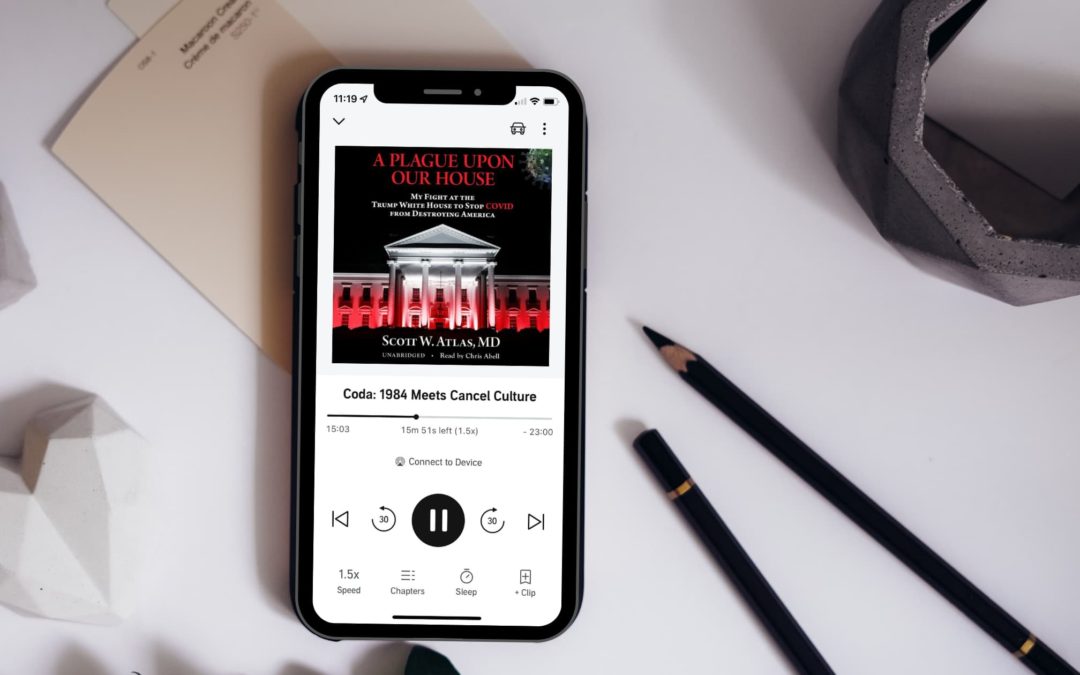
A Plague upon Our House: My Fight at the Trump White House to Stop Covid from Destroying America by Scott W. Atlas, MD is a look back at what went on with the coronavirus task force during President Trump’s time in office and through the election.
Hearing (or reading) what went on during the task force meetings will make your blood boil as there were concerted attempts to conceal important information, pushes to mandate ineffective measures, and even discussions about making the American people MORE afraid. According to Dr. Atlas, the prominent members of the the group never presented scientific evidence to back up their claims and were even offended when their statements were brought into question in light of research and scientific studies. He was amazed that everyone walked on egg shells to keep Dr. Birx happy.
It is also interesting to see Dr. Atlas’s shift as new information and research became available. His position on masks, treatments, and vaccines seemed to evolve throughout the book. He is not afraid to criticize the people in authority and to question the motives of those involved though he does so with tact and respect (at least initially for some).
He clearly did not approve of Vice-President Mike Pence’s lack of assertiveness as leader of the task force. His opinion of the pandemic handling by Drs. Fauci and Birx is very clear. And while he obviously admires President Trump, he even points out his flaws when it comes to covid.
The book contains a lot of repetition as information is retold with different emphasis in different chapters. If you want an overall view of the content of the book, simply read the last chapter.
Because the book is a firsthand account, it is related in the first person (I, me, my, etc.) and might come off as a bit self-promoting in some sections. It is disheartening to hear about the persecution Dr. Atlas encountered once he joined the task force.
In a time when we are repeatedly told to trust “the experts,” those who have extensive credentials in the field, like Dr. Atlas, are being censored. It is appropriate that the Coda of the book is a comparison to George Orwell’s 1984.
For Further Reading

by Kelli Garms | Apr 14, 2022 | Family
This is a continuation of my covid story, written about 17 months after I initially contracted the virus.
On Thursday, September 17, 2020, I came down with a fever. I only remember the date because I was supposed to serve the next day at our church’s women’s conference, and I had a lot of women counting on me. Of course, I was not able to participate in the conference, and you can read the whole story about my covid experience here.
Long story short, I was hospitalized because my oxygen levels were too low. I was back home on Wednesday, September 30, and I began my recovery. Overall, I have recovered well. It took me a while to get my energy back, but I slowly began feeling somewhat normal. There were a few things that have stuck with me that have been a bit annoying. For example, the taste of mint and peanut butter have never gone back to normal, and the smell of coffee, which has never been a favorite of mine, now makes me want to throw up.
About three months after I was in the hospital, my hair started to fall out. I lost about half of my hair and spent the next year babying it and waiting for it to grow back out, which it has, and I think it’s fuller than it was before thanks to my talented hair stylist and the great products I use.
But the most annoying residual side effect I’ve had is the constant coughing. While it has been better at times, any little thing can set it off. What I’ve been using as my gauge is whether or not I can make it through an entire worship song without coughing. I’ve spent my whole life singing, so losing my ability to get through a song has been difficult. And seventeen months later, I’m still unable to sing a whole song during the music portion of our church’s worship service.
In January of 2022, I came down with a cold. It settled in my chest and made me lose my voice for the second time since I had covid. And this time, it hung on even longer. I follow nurse Michele on Instagram, and she uses her platform to educate about covid treatments. I reached out to her, and she put me in touch with myfreedoctor.com.
When I connected with a doctor and shared my experience, I was officially diagnosed with Long-Haul Covid Syndrome (LHCS). You can click this link to find a formal definition, but basically it just means I have residual symptoms of covid. It is not contagious; it is not an active strain. My guess is I had damage to my lungs (as demonstrated by my x-rays and CT scan) that has kept my lungs in a weakened state.
The doctor prescribed Ivermectin (I had to get the prescription filled out of state and shipped), prednisone, and high-dose omega-3. She also told me to take zinc, vitamin C, vitamin D3, and Quercetin in specific amounts. I am also nebulized a mixture of saline, hydrogen peroxide, and iodine. The prescriptions lasted about a month, and I checked in with the doctor regularly.
Since undergoing treatment for LHCS, I can now make it through the entire song service without coughing! I no longer have to carry a drink with me wherever I go in case I have a coughing fit. And I don’t wake up in the middle of the night coughing, so I’m getting better sleep. My next litmus test will be when I catch another cold. We will have to see if it triggers the same effects and if it holds on for a longer period of time. At least, I will be prepared with the over-the-counter options I took during treatment and Ivermectin I keep on hand.
There are some things I would have done differently had I known then what I know now:
- I had covid before vaccines were available, so that is a moot point since I have natural immunity.
- I would have gone to my doctor instead of the ER had I realized how I would be treated in the hospital. I found out after the fact that my doctor has been treating patients using protocols that make sense.
- I would never have voluntarily put a mask over my face as I believe it exacerbated my original symptoms and created an environment that allowed my on-going symptoms to thrive.
- I would have had high quality supplements and a nebulizer in my house and ready for use.
The truth is I was a sheep. I trusted the medical community and the government to do what they say and put the needs of people first. Even when I arrived in the hospital and they asked me if I wanted Remdesivir, my response was, “you are the expert” as I signed the form. I am no longer a sheep! I know the “pandemic” has been terrible—loved ones have died, businesses have shut down, abuse has increased—but one positive thing has come out of it. Many people, including my family, have come out of their stupor. We are no longer blindly following the “experts” and are taking steps to educate ourselves and make logical decisions.
For Further Reading

by Kelli Garms | Mar 25, 2022 | Prayer
When we pray Scripture, it helps us understand the passage in more depth and allows us to talk to God in His own words. I encourage you to use this prayer as an example and then make it your own as you pray through the book of Colossians.
Lord,
I pray that faith in Christ Jesus will be known across the city, nation, and world. Give me love for the saints because of our shared hope of Heaven. May the Gospel bear fruit and increase. May I be a faithful minister of Christ and be filled with the knowledge of God’s will so I can walk in a manner worthy of the Lord and be pleasing to Him.
May I bear fruit by my good works, increase in knowledge, be strengthened for endurance and patience, and give thanks for being qualified by God to share in the inheritance of His kingdom, for being delivered from the domain of darkness and transferred to Christ’s kingdom, and for redemption and forgiveness of my sins.
Christ is the image of God and the highest in rank. He created all things, and He sustains His creation. He is the head of the church, He is preeminent in everything, and the fullness of God dwells in Him. He makes peace between me and God through His blood. He reconciled me to Himself in spite of my hostility and evil deeds, and He presents me holy and blameless and above reproach before God!
May I remain faithful, stable and steadfast, in hope. I pray that I rejoice in my sufferings for the sake of other believers that they may be strengthened through my testimony. What a marvelous gift that, by grace, God included Gentiles in His work of redemption! May I strive in His strength and not my own.
May I reach full assurance of understanding and knowledge of Christ and not be deluded with the plausible arguments of this world.
May I walk in Christ in the same way I received Him: rooted and built up in Him, established in the faith, and abounding in thanksgiving.
May I not be taken captive by worldly ideas.
May I be grateful for being made alive with Him, being forgiven all my trespasses, and having my record of debt canceled.
He has disarmed and put to shame the rulers and authorities.
May I not get hung up on traditions that are a mere shadow of things to come.
May I never take away or add to the Gospel.
May I always hold fast to Christ!
Help me to seek things that are above with Christ, and to set my mind on things above and not on things on the earth. I want to put to death earthly things and put on the new self, which is renewed in knowledge, demonstrating compassion, kindness, humility, meekness, patience, love, peace, and gratitude, bearing with others and forgiving others.
I pray the Word of God will dwell in me continually through teaching, admonishing, worshipping, and thanking.
May I do everything in the name of Jesus.
I pray that I will submit to my husband as my God-given authority. I pray that my husband will love me as Christ loves the church. I pray that my children will obey. I pray that my husband and I will not provoke them. I pray that we will all submit to authority with sincerity of heart, for the Lord and not men. I pray that we will conduct ourselves in justice and fairness to those who submit to us.
Help me to be steadfast in prayer, always watching. May the Gospel go out. May I make the best use of the time, season my speech with grace, and know how to answer each person in every situation with truth in love.
In Jesus’ name,
Amen
You Might Also Enjoy:

by Kelli Garms | Mar 24, 2022 | Book Review
Cold-Christianity by J. Warner Wallace goes through the evidence, biblical and extra-biblical, to prove the Bible reliable.
Maybe it is because I love crime novels, but I thoroughly enjoyed J. Warner Wallaces’ book, Cold-Case Christianity, in which he uses his skills as a cold-case detective to demonstrate that the Bible is true and reliable. He set out to prove that it wasn’t, but the deeper he got, the more he realized that it was a credible source.
He compares the four Gospels to eye witness accounts, sharing details of actual cases he’s worked. He demonstrates how we require much less evidence for any other work of ancient writing than we claim to need to prove Scripture. He defines terms and explains courtroom proceedings in a clear manner so anyone can understand them. He shows the reader how to tell the difference between actual evidence and distractions (artifacts). And he even explains what it takes to create a successful conspiracy theory, and why Scripture isn’t one.
Once we’ve collected the evidence, Wallace takes us step-by-step through examining that evidence to determine how it affects our case, exploring the pros and cons of each type of evidence.
Beyond teaching apologetics, Cold-Case Christianity teaches criminology in a fun and interesting way!
**This book makes a great addition to an apologetics or Christian Worldview curriculum.
Other Book Reviews